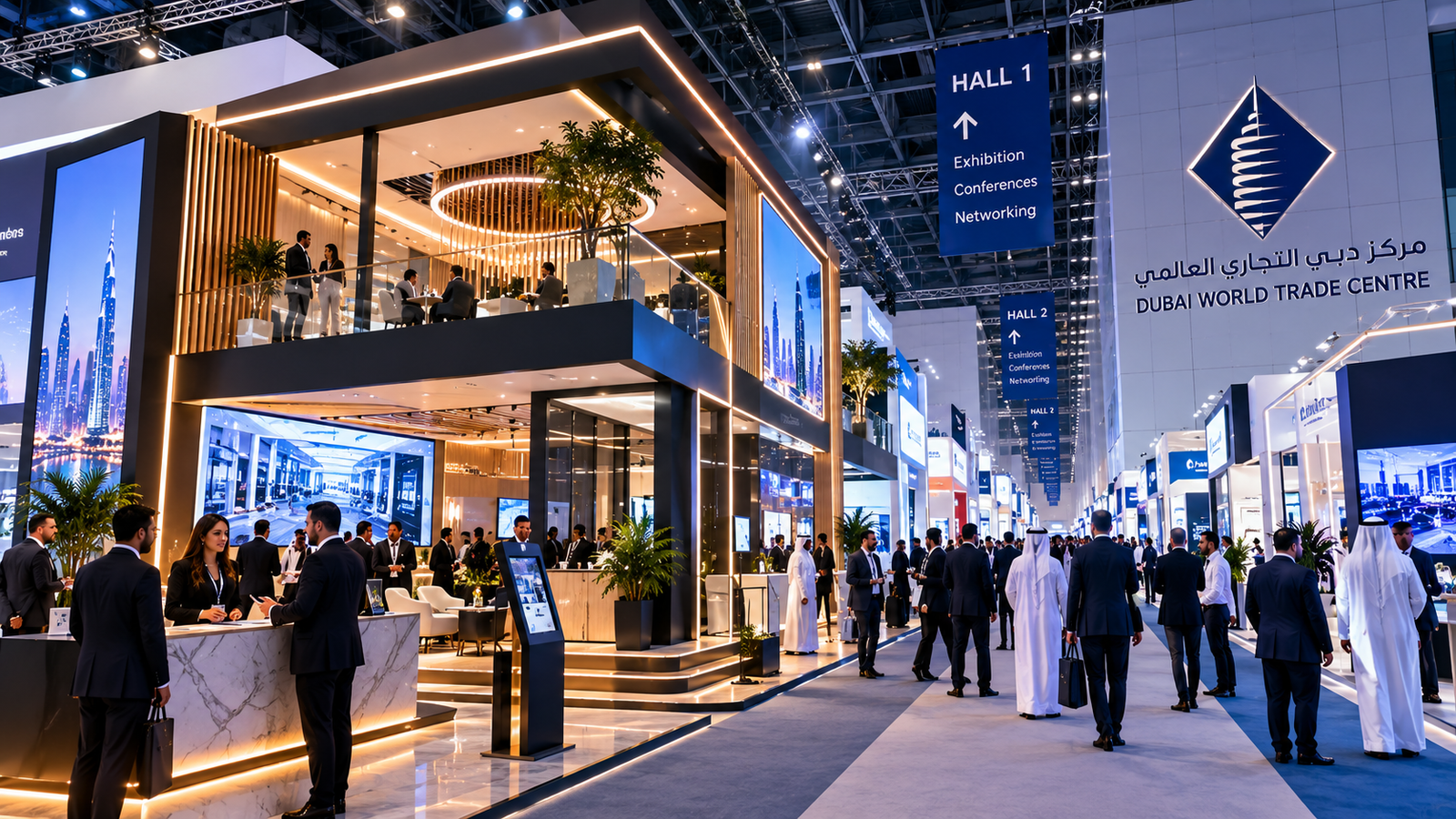
Dubai World Trade Centre isn't just a venue; it's a machine. Hundreds of exhibitors, dozens of halls, and a build-up schedule measured in hours, not days, combine under one roof to create some of the region's biggest B2B moments. And when you're planning your brand's presence at a DWTC exhibition stand, the difference between a showstopping presence and a stressful scramble can often be down to how early you started, how well you understood the venue's safety framework, and whether your exhibition stand contractor in Dubai actually knew the rulebook before the first panel went up. At Oh Yes Events, venue research and business development are at the core of our ethos, and few venues reward that kind of groundwork more than DWTC.
Dubai World Trade Centre has spent decades earning its reputation as the Middle East's flagship venue for corporate summits in Dubai and large-scale trade exhibitions, and that reputation has led to its name featuring on every major industry calendar, from GITEX to Automechanika and the Gulf's largest print and packaging shows. Its scale is precisely why it works: multiple interconnected halls, a purpose-built exhibition infrastructure, and a wealth of experience hosting everything from single-story product showcases to towering, multi-tiered branded environments.
But it also brings a formalized regulatory system that governs all aspects from stand height to the door your forklift is allowed to use, and it is these requirements that any company wishing to create a truly high-impact exhibition stand at the venue must treat as their design brief.
Ask any experienced exhibition stand builder in Dubai when planning should start, and the honest answer is always going to be further back than you might expect. A serious presence at DWTC—a multi-story exhibition stand or custom double-decker build—typically requires six months of lead time before the show opening date.
This runway covers structural engineering sign-off and contractor licensing checks, hall allocation negotiations with the organizer, and the multi-stage DWTC stand approval process, which reviews structural drawings, electrical load calculations, material specifications, and fire safety compliance before a single panel is cleared for build. Contractors unfamiliar with these requirements routinely submit incomplete documentation, and rejections at this stage can add anywhere from three to seven additional days to an already tight production timeline. On a fixed show date, that's not a delay—it's a crisis.
This is where the value in working with an experienced corporate event planning company in Dubai is obvious; six months out is the point where the unglamorous groundwork (hall selection, structural pre-approval, contractor vetting) has to begin, well before anyone is even thinking about branding and booth flow. Once this clock has begun, the next consideration is who will be allowed on site.
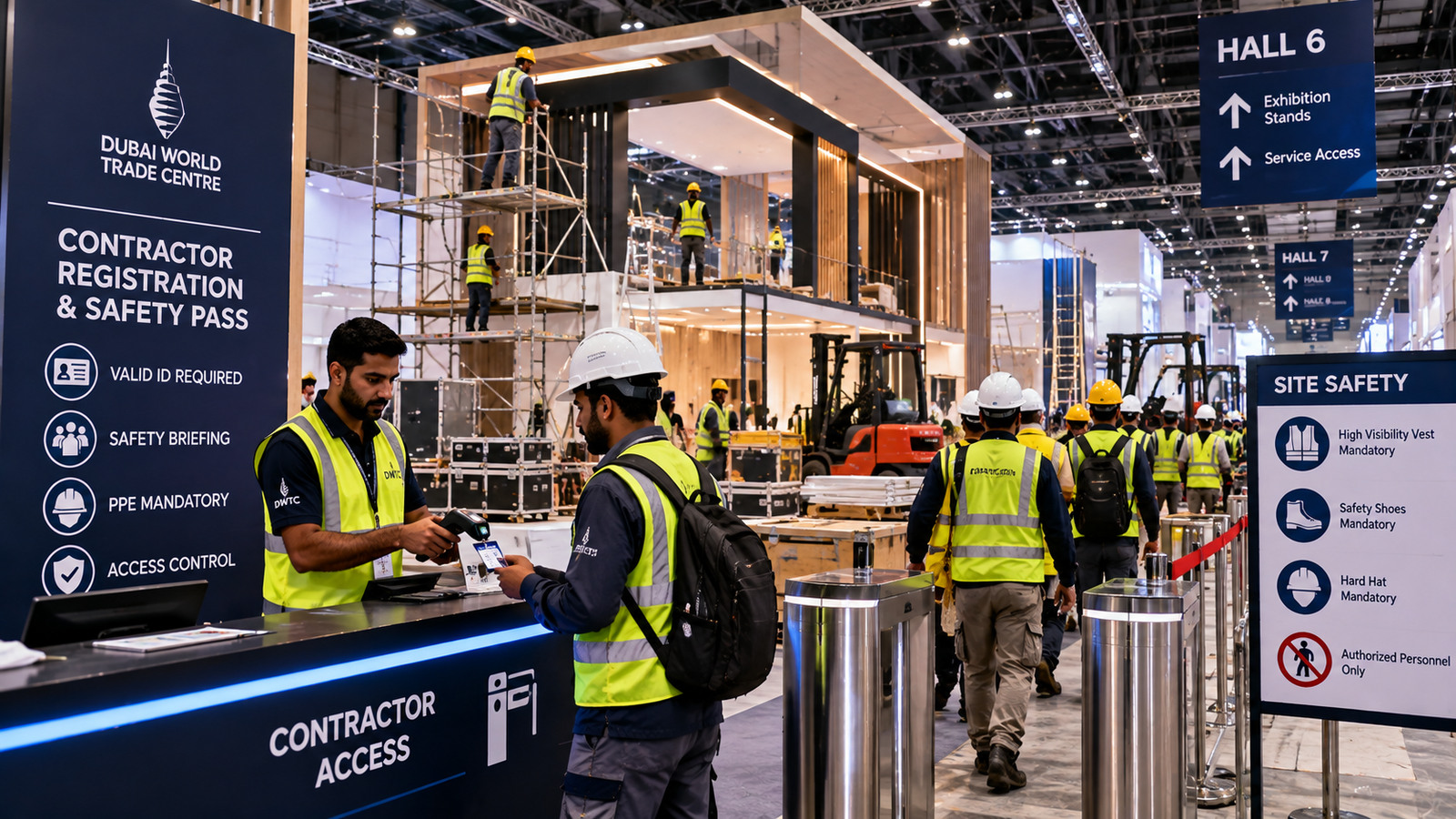
DWTC treats the exhibition floor during buildup and tear-down as an active construction site, and it enforces this classification strictly. Contractor safety passes are mandatory for anyone accessing the halls during these periods and all contractors must carry a valid DWTC contractor badge along with documented proof of organizer-approved access. Personal protective equipment (high-visibility vests, safety shoes) is required without exception across all DWTC venues.
This access is strictly controlled, with all stand equipment, construction supplies and contractor vehicles passing through a designated rear marshalling yard; contractors are forbidden from using the front concourse entrances used by visitors and no forklifts or general plant are permitted into any hall while it is open to the public. Contractor health and safety performance is actively monitored throughout the event lifecycle and repeat violations can see individual contractors (or even crews) denied further access to the venue.
For any brand, this has one easy-to-overlook implication: the exhibition stand contractor's compliance record is now part of your event's risk profile. An unfamiliar or non-compliant contractor not only puts their own access at risk, but they can also jeopardize your stand's build-up window. Once your people have been cleared to be on-site, the next step is to look at what they are allowed to build.
Double-decker booths and towering branded structures are some of the most visually powerful tools in a B2B exhibition strategy, and DWTC accommodates these, but only within a defined structural framework. Following recent incidents with taller stand structures, DWTC has put in place a formal health and safety review specifically for these builds; any stand design must be approved by the DWTC Health and Safety team before construction can begin, and any single-story structure of four meters or above is now subject to a mandatory structural review process.
For multi-story exhibition stands, this means structural drawings, load calculations and material specifications all need to be signed off well ahead of the show, along with confirmation that engineering limits (including a required 1.5-meter clearance gap between the top of any stand and the venue's roof trusses) are respected. Floor loadings are also capped to prevent damage or subsidence and stands are prohibited from using venue walls or doors for structural bracing.
None of this is designed to limit ambition; it's designed to make sure ambition doesn't outpace safety in a hall holding thousands of visitors. The brands that build the most memorable multi-level presences at DWTC are, almost without exception, the ones whose contractors understood this framework from day one rather than treating it as a late-stage compliance hurdle.
Beyond the structural review process, DWTC's build up and tear down periods fall under the Dubai Municipality Code of Construction Safety Practice, and the venue's own detailed Health and Safety Rules and Regulations. This is the document set that governs everything from fire-rated cable containment to the prohibition of alcohol on site during build phases, and it applies across all DWTC venues.
A few provisions are worth noting for planning purposes: access passes for build up and tear down periods cannot be issued to anyone under sixteen, and hot works (any work that involves open flame or high heat) must be documented and controlled by the organizer at all times. Crucially, a completed stand cannot go live without a Permit to Build (PTB) as confirmation that a submitted design meets DWTC's health and safety standards; building without one exposes the exhibitor to disciplinary action even after the fact.
Together, these rules comprise what is essentially a license to operate inside the venue and navigating them smoothly is one of the clearest indicators of whether an exhibition stand company in Dubai has genuine DWTC experience or is learning the rulebook on your project's timeline.
This is where planning strategy comes in; between venue research, contractor vetting and the business development groundwork needed to secure the right hall on the right dates, Oh Yes Events approaches each DWTC exhibition the same way we approach any high-stakes corporate activation—by treating the regulatory framework as part of the creative brief. And for a brand weighing whether to build in house or bring in a corporate event management partner with DWTC experience, the honest answer is often simple: the six-month runway, the safety pass logistics and the structural approval process are hard enough to navigate once. They shouldn't be something your team is learning for the first time under deadline pressure.

A minimum of six months is the realistic benchmark for any custom or multi-story build to account for structural approvals, contractor licensing and hall allocation prior to the show opening.
A valid DWTC contractor badge, documented organizer approval, and appropriate PPE, including high-visibility vests and safety shoes, are required for access to DWTC exhibition halls.
Any single-story structure four metres or taller requires mandatory structural review, and all custom or complex modular stands must be submitted for approval covering structural, electrical and fire safety compliance prior to build-up.
A Permit to Build (PTB) is DWTC's official confirmation that your submitted stand design conforms to DWTC Health & Safety regulations. A PTB is required prior to any works commencing onsite in your allocated stand, and failure to obtain a permit to build runs the risk of disciplinary action being taken regardless of the finished quality of the completed stand.
Not permitted. All stand equipment, construction supplies and contractor vehicles must gain access to the venue through the designated rear marshalling yard, not the main visitor entrances on the building concourse.
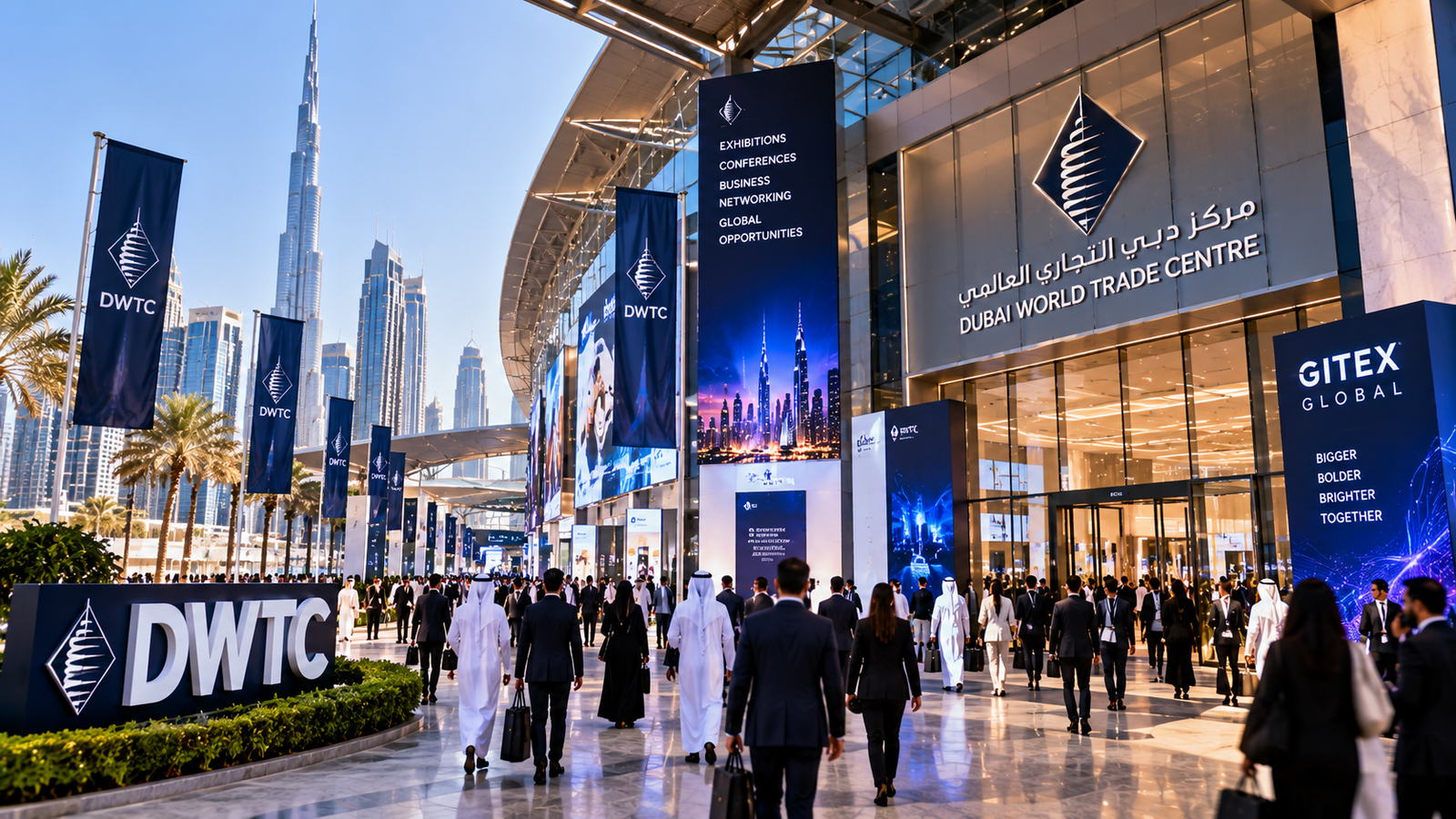
Building at DWTC rewards exhibitors who respect the process as much as the pitch. Get the timeline right, secure those vital safety passes for your team, and get the structural approvals correct, and the venue delivers exactly what it promises: a stage large enough for a brand's most ambitious B2B moment to actually land.