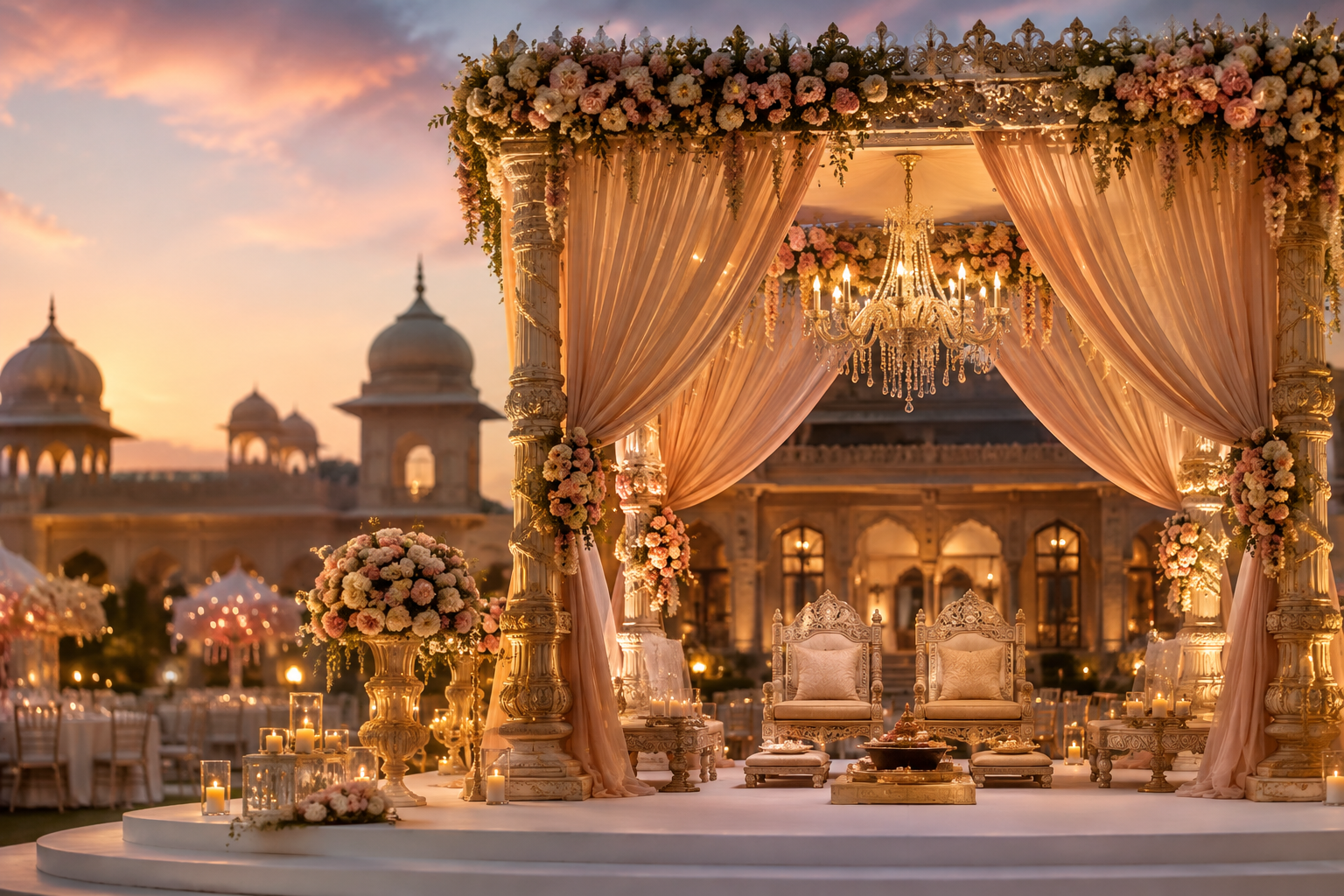
Planning a wedding from thousands of miles away is always a different experience than planning it from next door. Your Pinterest board is all set, and your guest list is growing, but you still need help bringing your dream wedding to life in India. In fact, you need someone on the ground who can take charge of every detail because Planning a Destination Wedding is much more than just imagining grandiose proposals over video calls. Wedding planning for NRI's today is not an end but a means to return to family & friends and recreate the nostalgia of home combined with the luxuries of contemporary celebrations. It is all about creating a unique blend of Indian Wedding Traditions along with modern aesthetics while managing a host of logistics & family dynamics both in the country and overseas.
So when it comes to planning an Indian wedding from abroad, it is only natural that couples would require assistance with finding the perfect venues, coordinating with vendors, managing timelines, dealing with multiple functions, and catering to the requirements of guests who've travelled great distances. This is why the right wedding planner can make all the difference. As one of the Premium event management companies in Chennai, we at Oh Yes Events believe in blending creativity with execution to deliver experiences that are sophisticated yet intensely personal
Whether it is luxury or tradition that you and your guests desire, our planners work relentlessly to ensure that your Indian wedding is a cherishable experience for everyone involved. And since we understand that for an NRI couple, their Indian wedding is much more than an overseas affair, we take great care in incorporating every minute detail that makes an Indian wedding so special & unforgettable.
When you are planning from abroad, it is tempting to focus on the obvious—the venue, the décor, the attire, the flowers. But a wedding becomes easier to plan if you start with the subtleties. Your style, priorities, culture, and guest experience must come together to define the wedding that you want vendors to bring to life.
To start with, decide what kind of wedding you want to have. A Modern Indian Wedding could be all about understated elegance—fresh flowers, a contemporary invitation suite, and décor in sync with the rituals. A heritage wedding would feature architecture, artifacts, and textiles in keeping with history. An international couple might want to go with a fusion Indian wedding to incorporate both cultures without one overshadowing the other. It is entirely possible to have a contemporary Indian wedding that still retains its cultural roots. The difference lies in the muted opulence in place of the overt grandeur. What matters is a uniformity of style that reflects your individual taste. Think of the contrast between an intimate affair featuring curated elegance and an all-encompassing lavish soiree. The same applies to your choice of mandap, lighting, and table décor.
An Indian wedding offers a cornucopia of options when it comes to rituals, cuisine, and ceremonies. Each tradition carries with it a unique significance and is steeped in generations of cultural heritage. However, an NRI couple may only want to include the most significant rituals for their big day. Discuss with your partner and parents what Indian wedding traditions you wish to feature. It could include mehendi, haldi, sangeet, baraat, or the wedding ceremony itself. Your community and family members may also have their own unique regional customs. Educating yourself on their meanings may help you decide which Indian wedding rituals you want to include in your own wedding. Doing so will enable you to avoid getting caught up in clutter and help you make more meaningful choices. This is especially true for cross-cultural weddings, where the two traditions are brought together for the first time.
When you have an idea about the overall look and feel of your wedding, make a list of non-negotiables. Your list could include everything from a small guest list to top-tier cuisine, luxury accommodation, and entertainment. It could also contain a few must-have Indian wedding essentials, such as décor or a captivating display to welcome visiting guests. Some couples may want to prioritize photography, videography, or creating a memorable cultural experience for distant family members who have made the trip specifically for the wedding. Whatever your priorities are, make sure to note them down before finalizing any details. This will help ensure that your planner knows what to focus on while also allowing room for other suggestions. As far as your NRI wedding planning in India goes, a clearly defined vision will help you and your planner make smarter decisions about your big day.
When you are planning from abroad, it is tempting to focus on the obvious—the venue, the décor, the attire, the flowers. But a wedding becomes easier to plan if you start with the subtleties. Your style, priorities, culture, and guest experience must come together to define the wedding that you want vendors to bring to life. Once the vision for the wedding has been created, the next step is figuring out where that vision will come to life. The choice of the wedding destination is a tricky one for NRI couples. It has to be accessible to their guests, have good accommodation, not have wildly varying temperatures, and be viable for both ceremonies and the overall wedding experience. Choosing the wedding destination can make or break a big celebration.
The first thing to consider when choosing the wedding destination is obvious but frequently overlooked: how easy will it be for everybody else to get to the location? If you are expecting a large number of international guests, it is essential to research transportation options. For NRI weddings, this means figuring out how many international flights will have to be taken, how long the layovers will be, what sort of transport is available upon arrival, and how far hotels are from the venue. This is an essential consideration for weddings with elderly guests, younger ones, or those without much experience in travelling to India. Remember, your best destination wedding in India will not be the one with the most inaccessible, exotic location. It will be the one that allows the celebrations to flow smoothly for everybody involved.
The venue has to be picked based on the needs of the wedding. You may want to hold your ceremony and reception in the same place, or you may want to have them separated by days in different locations. Luxury hotels offer the benefit of being able to hold events in their banquet halls and offer excellent catering and hotel amenities, but resorts allow for a more integrated destination wedding experience, especially if you are planning to have several events over multiple days. Venues may vary from heritage buildings to private properties fit to host a wedding. The choice ultimately depends on your requirements. When choosing your venue, remember that a multi-day luxury event will have drastically different requirements from a small private ceremony followed by a dinner.
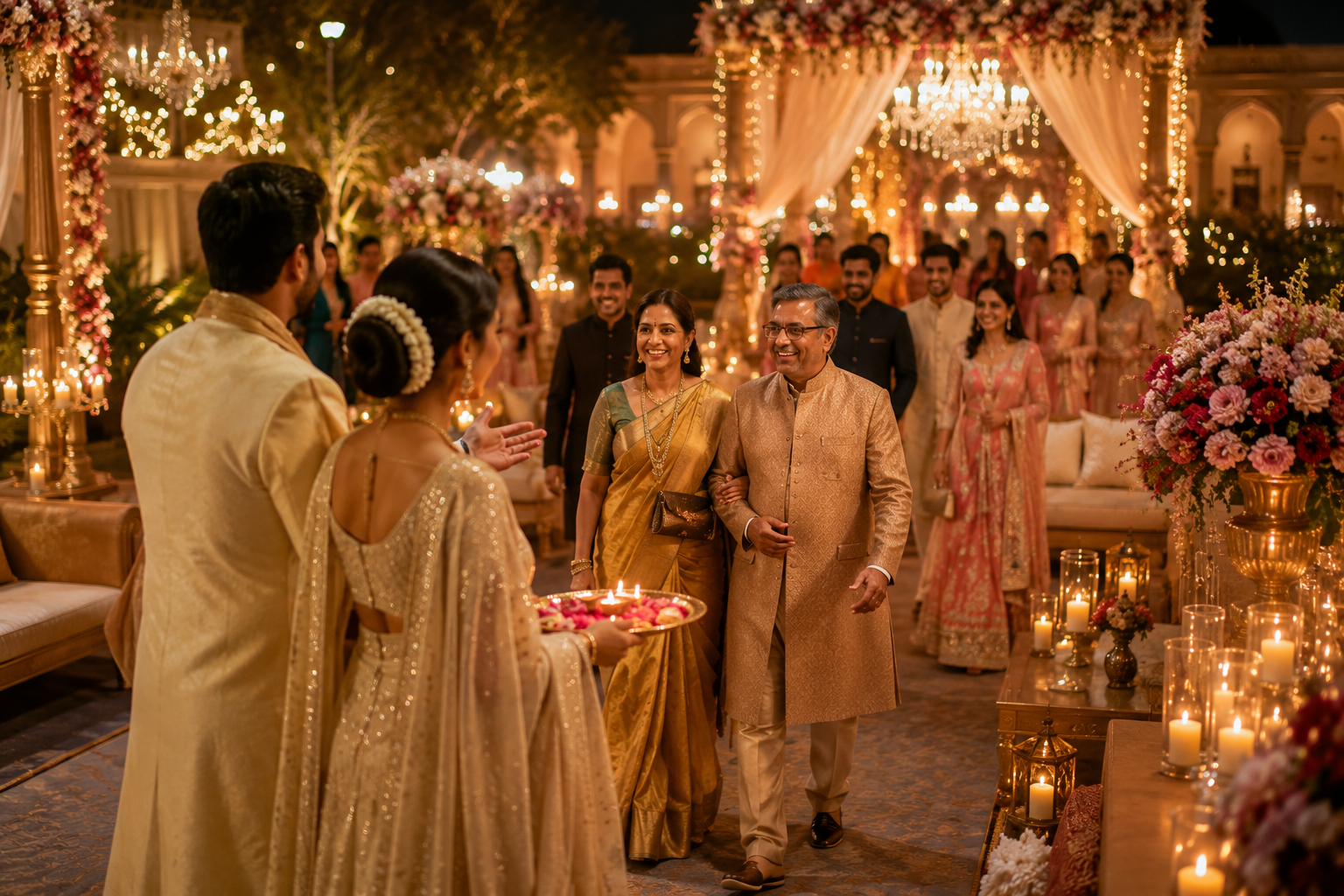

For most NRI weddings, the venue is not a singular space where the whole wedding will take place. Guests will have to travel to the venue, arrive for the mehendi or haldi, leave for the sangeet, return for the wedding, and finally, head to the reception. If any of these events take place at different venues, guests' transportation needs can add up, along with additional styling and catering requirements. This is why destination weddings in India often involve choosing a city or a hotel that offers extensive on-site amenities and can host multiple types of events.
If you are considering Chennai for your wedding, you may want to consider destination wedding planners in Chennai, who can best navigate the local terrain and plan your wedding with ease. Planners in other Indian cities can do the same, making it easier for people with limited knowledge of local infrastructure to plan a destination wedding in Kerala or Bengaluru.
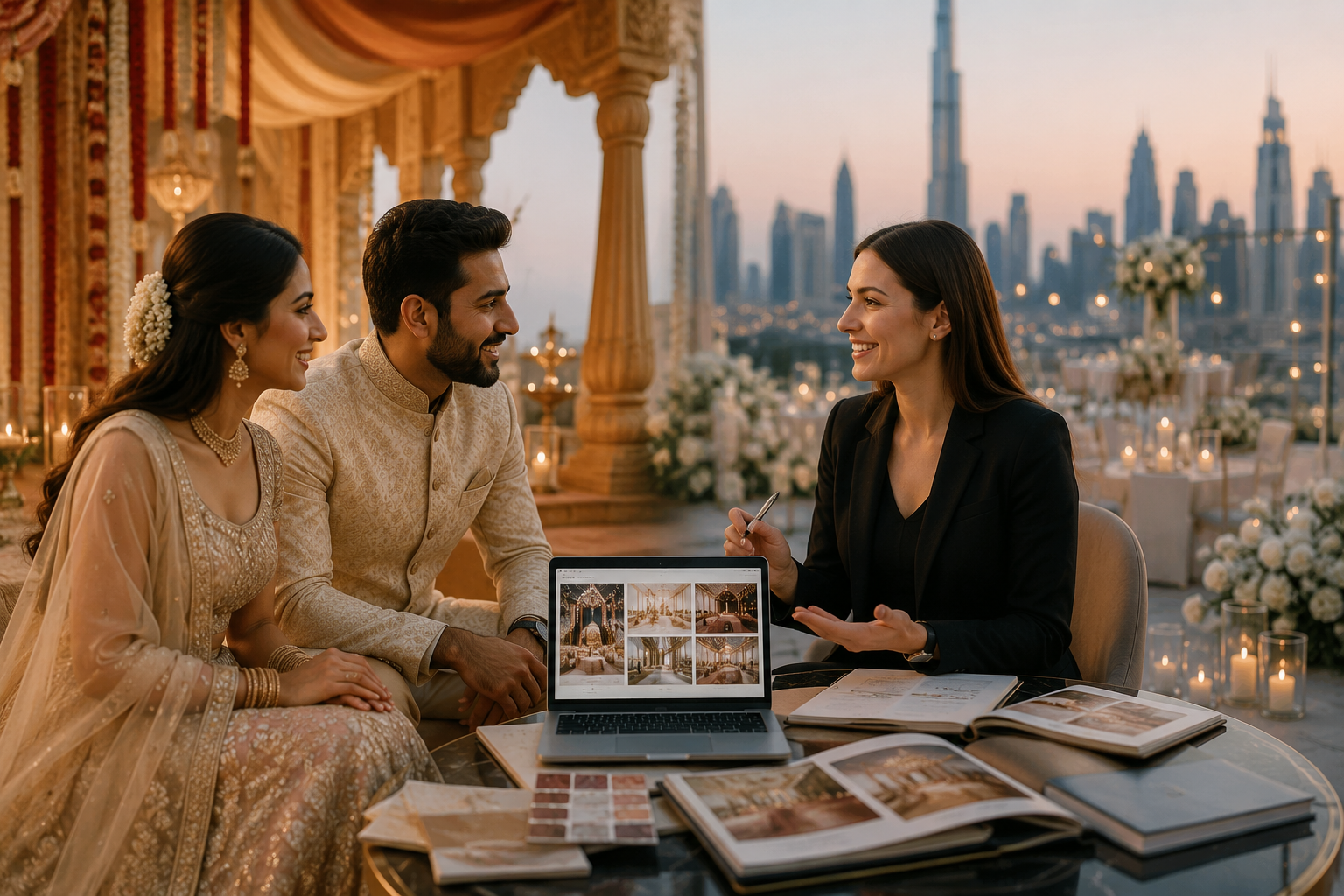
The same goes for weddings in international destinations. If you are considering Dubai, remember to look into the best wedding destinations in Dubai, keeping in mind the needs of your guests and how well the event will blend with the local culture. Ultimately, the destination wedding venue has to accommodate everybody’s needs while creating the desired ambiance.
It may come as a surprise to many, but the budget for an NRI wedding can become complicated in numerous ways. From currency differences to international travel and taxes, and from vendor payments to multiple functions, an NRI couple can easily go overboard on expenses. The trick is that they should not be thinking in terms of less; rather, they need to be prioritizing
Couples that are looking into planning their wedding from overseas should set up an extensive and realistic budget before talking to any vendors. The venue and location will be a huge expense, especially if they are planning on hosting it abroad. This is apart from catering, decorations, photography and videography, entertainment, outfits, beauty and styling, transport, accommodations, and more. Those that think about hiring a luxury wedding planner in Chennai or any other city in India should also remember to set aside funds for them, as they will be managing a big part of the event and should be included at the start. Essentials, experiences and extras should be three separate categories within the budget, as this will assist the couple in choosing what should come first when quotations start rolling in.
Planning your wedding from another country makes contingency funds even more important. At the last minute, new transport needs could arise, or there may be a request for additional accommodation or production needs. Currency exchange rates, if applicable, should also be taken into account. A last-minute change in the weather could also create additional expenses if some parts of the production cannot take place as initially agreed upon. Finally, a particular vendor may have requested something not included in the original plan. All of these unplanned expenses should be added as a contingency fund, a sum that should be set aside to accommodate new needs without blowing up the overall budget. Not only is a realistic contingency fund important to have, but it is also crucial to having peace of mind.
More does not always mean better, especially when it comes to luxury weddings. Elaborate venues, more flowers, setups, entertainment, and other additions may seem like a good way to increase the perceived extravagance of the event, but what most luxury weddings fail to realize is that comfort is just as important as extravagance. This is something that many luxury wedding planners in India understand well, as they know that a truly luxurious wedding means providing transport, food, entertainment, and other services that allow guests to feel taken care of. Indian weddings can be particularly stressful in that regard, where proper planning has a massive effect on how smooth the event will be. Accommodation needs should also be thought through, especially for guests coming from overseas.
In terms of Indian wedding décor, lighting, music and other additions, the same rule applies. To enhance the experience of the wedding, the couple should be looking to create a luxurious feel to the event. This might include a more comfortable setup, better seating and food, more entertainment options, and more comfort in general.
It should also be remembered that the purpose of a luxury wedding is to create an upscale Indian wedding experience, not necessarily one that looks expensive. This becomes particularly important for multi-day weddings, where the couple has the opportunity to provide different types of services for each day. The first day might be a more laid-back dinner, whereas the sangeet can include a higher level of entertainment and production. The wedding day itself would then be a more traditional affair, followed by a reception that is more modern in terms of presentation.
When it comes to NRI wedding planning services, this is another area in which a luxury wedding planner in Chennai can help. They will be able to choose what to include, as they know what will provide the best value for the couple. In essence, the best budgets are not the biggest ones, but rather the ones that know what they want to say.
For an NRI couple, the challenges of long-distance wedding planning rarely start with choosing the venue. It is usually the opposite—once the location is set, the pressure comes to execute the rest with equal precision. After all, a spontaneous tour of the hall may not be possible, a meeting with a vendor may clash with working hours, and one ‘okay’ may get buried under dozens of messages in different chats. Planning a wedding from abroad requires remote oversight, visibility, and a trustworthy team.
When multiple wedding vendors communicate independently with the couple, the planning process becomes fragmented and error-prone. Different ideas may contradict each other, design changes get lost in the chaos of multiple calls, and an update about the guest house may fail to reach the transport provider. This is why it is critical to have a planning system that acts as a single source of truth.
A centralized digital planning system serves as the nerve centre for all the moving parts. It may take the form of a shared timeline, budget sheet, vendor directory, guest list, design repository, and regular video conferences. Most importantly, a planning partner should document every major decision with references, approvals and follow-up actions so that nothing falls through the cracks. For an NRI couple, this level of organization is invaluable—it ensures they can stay in control even when thousands of miles away.
In the context of Indian wedding planning, not all vendors are equal. A competent wedding planner in India will understand the nuances of catering to international clients.
This includes presenting options digitally, communicating across time zones, and delivering on details without the benefit of an in-person meeting. Couples planning their wedding from abroad should look for vendors who can balance their cultural expectations with practical limitations. For instance, a couple may not be able to tour multiple venues in one day or personally approve every sample.
The communication skills of a planner become critically important in such situations. Ideally, the planner should act as a curator—guiding the couple towards the most suitable options and streamlining the decision-making process. While the couple retains ultimate say, the planner anticipates needs, highlights priorities, and reduces the scope for disagreements. The goal is to empower the couple, not overwhelm them.
While staying informed about the wedding is important, an NRI couple should not have to micromanage the entire event. It is not necessary for the couple to meet the decorators, check in with vendors about the delivery of mandap materials, or arrive early to supervise the setup. These are the responsibilities of an on-ground team that understands the local context and logistics.
This is where Oh Yes Events can act as a reliable full-service partner. With decades of expertise in executing luxury weddings in Chennai, the team can handle all aspects from conceptualization to execution while keeping the couple engaged at key decision points.
By delegating day-to-day supervision to a trusted team, the NRI couple avoids the stress of constant monitoring while still retaining creative control. This becomes especially important in the final stretch—in the last few weeks leading up to the wedding, the couple should be reviewing and approving rather than making critical discoveries.
For an NRI couple, the final months of wedding planning can be incredibly stressful. Between venue visits, vendor meetings, and design meetings, it is easy to get caught up in the minutiae of the event. However, couples should resist the urge to approve every single detail personally.
A competent planning partner will create a structured approval system that minimizes distractions while ensuring quality control. Group meetings and consolidated updates allow the couple to focus on big-picture decisions. Key aspects such as layout, décor concepts, food menu, and entertainment can be discussed in detail while routine logistics are handled by the planning team. This approach prevents decision fatigue and ensures the couple only engages with matters that truly require their input.
An organized planning partner acts as a filter—separating urgent/important tasks from nice-to-have enhancements. By managing the noise, they help the couple enjoy the journey without feeling inundated with constant requests and updates. In the end, it is about empowering the couple to make smarter choices without becoming overburdened with excessive oversight.
The best NRI weddings are those that do not feel like a juxtaposition of two very different ideas. They are not an international luxury wedding with a few token cultural touches. Ideally, the perfect celebration will manage to make contemporary design, personal tastes, and cultural details seamlessly blended in together.
Luxury need not feel like historic preservation. Some of the most unique wedding venues and settings are built by finding ways to incorporate Indian craftsmanship into modern spaces and design statements.
Hand-woven textiles, regional embroidery, brassware, traditional metalwork, pottery, carved wood and other local materials can all help create a sense of place without going all out in one specific cultural direction.
Similarly, modern Indian wedding decor can borrow from traditional elements without going overboard. The mandap need not be extravagantly decorated—subtle touches of flowers, architecture, natural materials, and lighting can make it feel special without overshadowing the whole venue with excessive ornamentation. This way, the wedding venue can feel contemporary while still managing to evoke traditional Indian aesthetics.
If you are from an Indian family that practices a particular set of traditions, chances are you have mixed feelings about them. Some rituals might feel sacred and deeply meaningful to you. Others might seem bizarre and pointless. That is completely normal.
When planning a big cultural wedding, you do not need to engage in every single family tradition with the same level of religious devotion. It is more important to understand the meaning behind the rituals and choose the ones that feel authentic to you. You can use your personal insight to tweak the existing traditions or find creative ways to let your family members participate in them.
This line of thinking can be especially helpful if you are tying two very different cultural wedding traditions together for the first time. It is always a good idea to research the origins and meanings of every ritual you plan to include in your wedding.
When it comes to weddings, context is everything. For guests who are unfamiliar with your cultural traditions, a meaningful explanation can often make all the difference. You can use a program or a well-placed speech by one of your wedding emcees to help guests from outside your culture feel more welcome and included. This is also a great opportunity to let your family members take part in your celebrations and share their heritage with you and your partner.
Luxury international weddings tend to lean towards minimalism. Elaborate floral displays, bright colour palettes, oversized garlands, and other traditional Indian wedding staples might feel too busy and over the top in a space designed around light colours and sculptural details.
That does not mean that you have to sacrifice your cultural roots for the sake of minimalism, though. The key to designing such a wedding lies in balance. A modern aesthetic does not overpower traditional Indian motifs and details, instead letting them become the focal point of the celebration.
You can achieve this look by incorporating traditional Indian patterns and materials into small details like stationery and menus. Tables can be dressed in contemporary linens with hints of regional textiles and local flowers used as sculptural displays. Essentially, everything can continue to feel modern but with select details tweaked to reflect your cultural heritage. Less can truly be more when it comes to traditional Indian wedding motifs and details.
Any wedding that takes place outside of India, regardless of its venue, should be driven by the location and the space that it is in. Venues built around dramatic coastlines and unique geography will want to highlight their natural features. Older buildings might need delicate touches of light or other design details to bring their architectural language out without overshadowing the space. Celebrations in cities like Chennai will want to make use of local materials, aesthetics, and cuisine as a way to engage with the region without compromising on luxury and contemporary design.
This way, an Indian wedding abroad can feel both familiar and new—a unique expression of culture and tradition that still manages to reflect the tastes of the newlyweds. Your international experiences can shape the design and aesthetics but should be tempered by the characteristics of the space you are in. That way, your destination wedding will feel more memorable and meaningful—not just like a generic luxury experience.
For an NRI couple, the guest experience at a wedding starts way before arriving at the venue. People would be landing in different cities, taking connecting flights, navigating through foreign streets, and adjusting to a new climate. Upon arrival, they want the wedding celebrations to begin, not another leg of their journey. Great wedding planning will ensure that the transition feels seamless. The guest experience at a destination wedding requires meticulous planning. It begins with figuring out travel and accommodation requirements for your guests.
Flights are a common concern for any NRI couple, and rightfully so. Some guests may arrive at different times or have to take multiple connecting flights. Some may require airport drop-off, while others may extend their stay or arrive early. Some guests, such as elderly family members, may require special transportation, while families with children may need alternate accommodation.
Accommodation should be planned in tandem with the wedding venue. So, if you're staying at a hotel, it's a good idea to book nearby places for your guests as well. It's much simpler to get around from one event to the other if you're all in the same vicinity. This is especially important for an Indian wedding, where multiple rituals stretch across several days. With a little help from wedding planners, a guest tracker can help you keep a record of everyone's arrival, departure, and room details. Other guest tracker fields could contain dietary requirements, transportation needs, and emergency contacts. It may seem like a lot, but it's an essential part of wedding guest management.
The welcome should ease guests into your destination without overwhelming them. A welcome package with a note from the couple, a local guide, and a gift is a great way to do that. It may also include practical travel advice, local tips for first-time visitors, and event guidelines. For international guests, this is an important opportunity to learn about the local weather and climate, along with more practical details like the local language and cuisine.
This is where Indian hospitality shines through by thinking of every possible guest requirement before they even ask. The welcome should also begin to integrate them into your destination. Local specialties, souvenirs, or even a brief introduction to local culture will make your guests feel right at home. Instead of giving guests a set of instructions, you can make them feel that they are part of your experience.
Indian weddings are a joyous amalgamation of colours and energy. However, they can also be exhausting for an international guest. An overseas visitor may not know the significance of certain rituals or what to expect at the various wedding events. They may also not know how to dress or what to eat and drink, since Indian food varies from region to region. International guests may also have specific dietary requirements or medical conditions. It's important to think through such requirements and plan ahead.
If you're hosting an Indian wedding abroad, your guest experience planning should also factor in climate and local conditions. It's not just about making the event special but also ensuring that it's comfortable for everyone. Practical measures like a proper seating arrangement, water stations, special seating, or medical assistance could make all the difference. You could also explain certain rituals and their significance, if any, so that your guests know what to expect.
The same level of guest experience planning should be extended to your parents, grandparents, and children, since a multi-generational family wedding is quite common in Indian weddings. Your Indian wedding hospitality should not be seen as a one-size-fits-all solution but should be individualized for every member of your family and every one of your guests.
While an Indian wedding spans multiple days, it shouldn't feel fragmented to your guests. Your welcome dinner can be a casual affair, allowing your guests to unwind and get to know each other. The mehendi can be an intimate gathering, whereas the sangeet can be a lively celebration. The wedding ceremony can be traditional and meaningful, while the reception can see guests dancing the night away. Each event can be a distinct celebration, connected together by great food, exceptional service, and impeccable service.
It's all about creating a unique experience for your guests.
This is especially true for NRI couples, where guests may have travelled across the world to be a part of your big day. The entire wedding experience can become a shared Indian wedding destination experience for your guests, helping them bond over a unique culture that's totally new to them. This kind of wedding planning is much more than a single spectacular event, as it's all of the little things that add up.
A wedding can have a fantastic florist, an amazing photographer, a brilliant caterer, and a dazzling entertainment team and still lack cohesion. That is not to say that the people behind these services were not competent. More often than not, the issue arises from a lack of overall vision. The same problem becomes exponentially harder to solve for couples who plan their weddings from overseas, where they can't always be present to smooth out kinks.
The first step to planning a wedding is not to hire as many vendors as possible. It is to identify what kind of vendors you need according to the wedding you want. Depending on the scale of the event, this shortlist can contain the venue, caterer, décor team, photographer, videographer, entertainment, make-up and styling team, transporters, and production experts.
It is important that each one of these vendors has a sense of the bigger picture they need to serve
For instance, the photographer should know which rituals and family moments need to be captured; the décor team should know the production requirements; the entertainment team should know how the event's timeline works; the caterer should know about guest movements; and the transporters should know the entire itinerary (and not just the pickup and drop-off slots), among other things. This kind of coordination is the difference between a disparate set of vendors and an expertly led event team.
The design of a wedding is not restricted to the main events. The visual language runs through invitations, welcome signs, menus, table plans, décor, flowers, lighting, and even ceremony spaces. All of these can be subtly connected to create a sense of a shared world without being the same
This is especially important for weddings that combine traditional and contemporary elements. For instance, a fusion mandap can be paired with modern lighting and minimalistic floral arrangements, and the same décor can be used in the reception with slight modifications to reflect a contemporary aesthetic.
Similarly, Indian weddings can use a regional set of materials and motifs as a base without being overtly traditional. The idea is to use repetition with variation—a particular colour, texture, motif, or material can show up in multiple elements in different forms to suggest a shared design language.
Entertainment should be mapped according to personality rather than popularity. Hiring a live Indian classical musician would be a better fit for the welcome dinner, while a DJ would be a good fit for the sangeet night. Similarly, a cultural performance can be planned around introducing the guests to a certain art form, or a specially curated family performance can become one of the most talked-about highlights of the wedding. For a fusion Indian wedding, performances can become one of the best ways to blend cultures by moving fluidly between styles (rather than segmenting them into different events).
The same applies to production elements like sound, light, stage, and special effects that can be curated to highlight the ambience of each event rather than creating spectacles.
This is where professional help becomes indispensable. With multiple vendors, it is essential to have someone who has an overarching vision that ties the whole wedding together
Who arrives at the venue first? Who has priority over the space? Can the photographer shoot inside the décor or would it damage it? When can the caterers arrive? When can the sound check begin? When should the stage crew shift the furniture? Each one of these details may seem minuscule and perhaps invisible to the guests, but they add up to create the wedding experience. They are easy to overlook when planning from overseas.
The beauty of having one team that handles all of these tasks is that they can have a coordinated approach without having to ask for multiple approvals from distant family members or spend hours discussing the logistics with the wedding planner during the event itself. After all, the aim of a wedding should be for couples to enjoy their day and leave the machinery to the professionals.
One of the easiest ways to make your NRI wedding planning in India stress-free is to stop doing stuff during the wedding week. By the time you get here, your big day should already be pretty much put together, with vendors knowing what they need to do and your guests receiving all their required information. Your wedding week is for being in the moment, not for logistical firefighting.
If you intend on doing a bigger destination celebration, starting early enables you to make more considered choices, rather than being forced into whatever is available. Set the approximate guest list, budget and preferred dates. Then start narrowing the search, according to the available accommodations, number of functions and general location. It's also the right time to look for a planner if you're considering taking up NRI wedding planning services. An experienced team will be able to advise you on the best possible venues, as well as the general approach and vendor strategy. When you've set the venue, the rest will quickly fall into place.
At this point, the wedding planning should be entering its detailed design phase. Secure the biggest and most personal vendors (decor, photo and video teams, food and drink, and entertainment). Pick the general design concept that will carry through all the functions, with attention to visual detail. Set up any accommodation and transport arrangements if you have guests travelling from abroad. You should also begin formalizing the list of Indian wedding rituals you'll include, so every family member knows what to expect. This helps in particular in destination weddings, where many traditional elements need to be incorporated into the local event rather than held on separate days at the hotel.
Everything should be finalized in the last few months before the wedding. Set the guest list (or make final adjustments, if you're still allowing last-minute additions). Double-check transport arrangements, including private car rentals and airport pickups. The menu, entertainment, seating, and décor should be in their final approval stages. It's also the time to determine more specific production and family duties.
For an NRI couple, it's important to start organizing everything with a planner at this stage, rather than trying to receive dozens of details via WhatsApp. The more information a professional can collect ahead of time, the fewer surprises there will be for the couple. It's essential to create a master schedule that will define
vendor arrivals, guest transfers, ceremony timings, the couple's own schedule, photo opportunities, entertainment, catering, production details, family duties, and emergency contacts. The more specific it all is, the less the couple will have to organize on the spot.
Your wedding week should ideally feel pretty uneventful. Your guests should be arriving at the destination, getting their transfers organized, and putting their luggage in their hotel rooms. Your venue should be being decorated, with vendors setting up their equipment and planning where they need to be for each ceremony and function. You, the bride and groom, can make last-minute individual choices, but you shouldn't have to determine whether the stage is properly set or if the car for your 40-person wedding has arrived.
This is where the difference between wedding planning and wedding execution becomes apparent. An impressive concept is great, but it all needs to be turned into reality during the wedding week. Strong management of the guests, vendors, and production team is essential so that everything goes off without a hitch.
When it comes to a destination wedding planner in Chennai or another experienced team that can manage events across India, your timeline should serve as an all-encompassing reference, rather than something only the planner sees on their own computer. The ideal schedule is one that nobody has to think about too hard once everything is set up.
By now, the tangible requirements for an NRI wedding are already apparent. There is a venue to choose, a family to feed, a décor to plan, and a culture to embrace within a given budget. Essentially, all these factors are joined together by the planning partner. After all, for couples who have taken to overseas living: the choice of planning partner can define the wedding as either stress-free or as a months-long battle against egos.
A good portfolio is always a good start, but it doesn't say much about certain practicalities. Ask about their process, their communication style, their network of vendors and destination management approach, but also their understanding of the difference between style and substance. An experienced planner who has worked with a lot of NRIs might even have an added benefit of being able to communicate nuances better, as they would have to balance the demands of people from different cultures.
They should have an understanding of the fact that Indian wedding traditions aren't set in stone. Depending on their background, traditions can be incredibly different, not just across religions but also communities and regions. The right planner should always ask questions instead of making assumptions.
A smart question to ask any prospective planning partner is simple:
'Who will be there when we get married?' The person who shows you the portfolio might not be the one who supervises the setup. Ask them about who manages vendors, who tackles the logistics, who takes care of the guests, and who handles problems on the spot. This is especially important in the case of weddings for NRIs, where guests need to be ferried from place to place and across time zones. There is always somebody who needs to step in for the couple in their absence.
You should also ask about the team's hierarchy. Who is your primary contact? Who takes care of production? Who looks after the guests and their logistics? Who handles décor and other vendors' requirements? Who approves conflicting requests from vendors? Who is responsible for what? This demonstrates that the planning partner will take responsibility for the entire project.
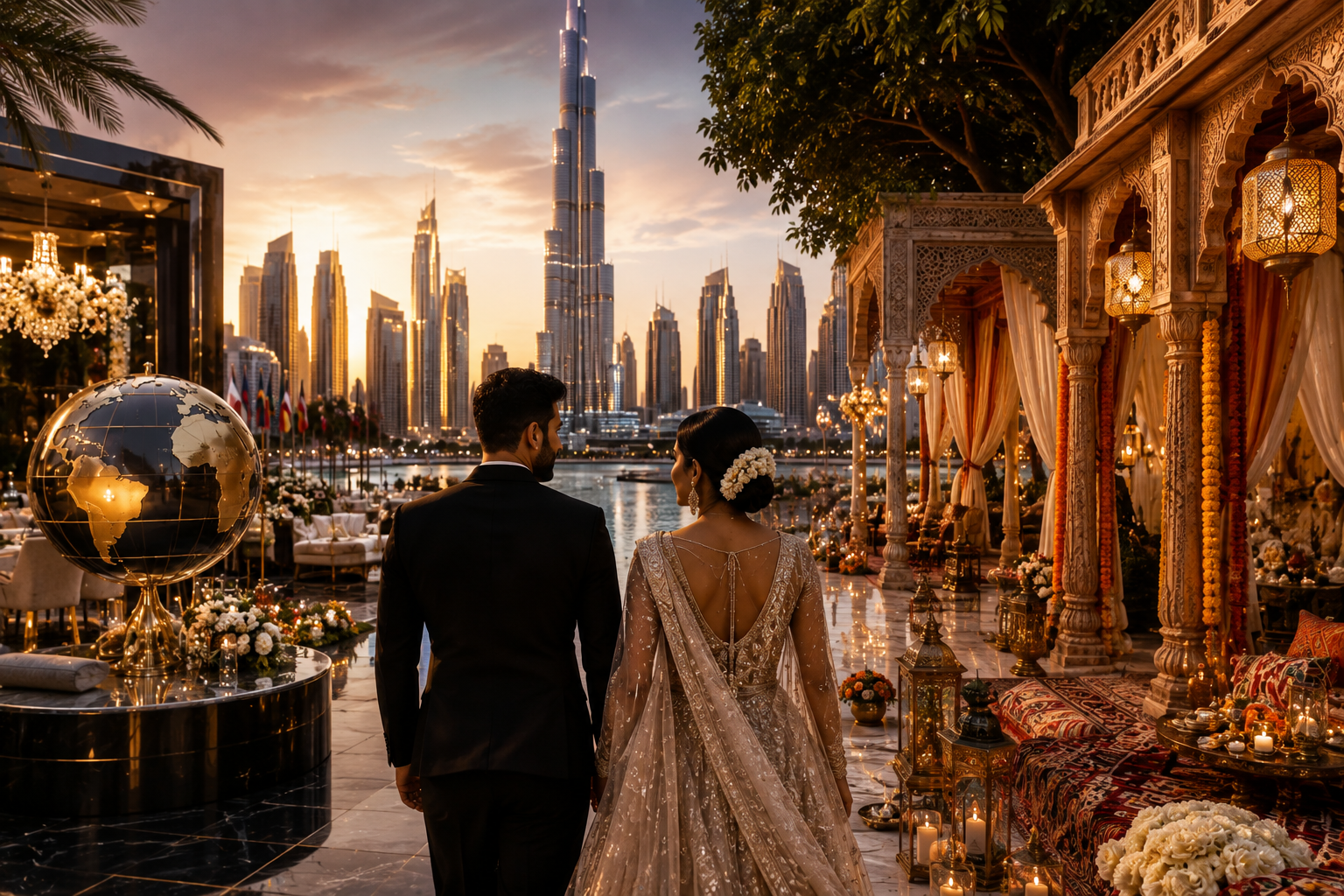
An end-to-end planning partner should always take care of the entire project as a single entity while also being able to break it down to the specific requirements of the couple. That includes venue, vendors, production, décor, guest management, transport and day-of execution, all of which are necessary to create a bespoke Indian wedding. For an NRI couple, end-to-end management is also a good way to ensure that they don't have to deal with too many people while abroad.
Oh Yes Events prides itself on being able to offer such comprehensive services as a premium event management company in Chennai, utilizing its understanding of the luxury wedding market to provide superior services in both planning and execution. The right partner should also be able to balance out the vision of the couple, providing guidance and practical advice while also being able to understand their ideas, however outlandish they might seem.
At the end of the day, an NRI wedding is all about interpretation. The couple might have an eye for aesthetics, but they also most likely have a wider knowledge of the global wedding market, including a list of international vendors to choose from. The planning partner, for their part, has an intimate knowledge of the local market, as well as a better understanding of logistics and local customs. These are two sides of the same coin, and the best planning partnerships are formed when they complement each other, without overshadowing one another. The NRI wedding planning services offered by Oh Yes Events are a prime example of such collaborations.
You should always be able to have a detailed conversation about the wedding you want, thousands of miles away, and be confident that the team knows what you want, rather than telling you what they think you need. Because the truth is, when it comes to destination weddings, the luxury of space isn't the only indulgence on offer. There is also a certain amount of peace of mind that comes with knowing that all the smaller details will be sorted out for you.
An NRI wedding in India is not one where you have to choose between international luxury and cultural authenticity. The most memorable ones are able to seamlessly weave the two, balancing between sophistication and sentiment to create a wedding that is both an expression of your global lifestyle as well as a celebration deeply connected to your roots.
The difference lies in smart planning, from choosing the right destination to making sure your vendor management is on point and your guests feel like they were part of a well-thought-out experience and Indian culture has been integrated with a level of care and depth that only someone who understands its value can achieve.
For overseas couples, the right wedding planning assistance makes all the difference, ensuring your big day feels personal and precise in equal measure. Oh Yes Events operates as a full-service destination event management company in Chennai, offering expert planning and execution as well as production, design, and hospitality services, to make your dream wedding a memorable reality in India.
Whether you're looking to plan a smaller gathering or a larger-scale wedding destination with guests from all over the world, the aim remains the same: to create a truly immersive experience where every single detail has been considered so that nothing about the wedding feels like an inconvenience. After all, your Indian wedding should not feel like another task you have to travel halfway across the world to organize; it should be an experience akin to coming home.