
As 2026 progresses, there are no longer events in organized, managed environments. Instead, they have evolved to be dynamic, highly visible ecosystems, heavily reliant on technologies and influenced by global spectators and real-time attention. Within such a scenario, event crisis management has ceased being an occasional task performed behind closed doors to become one of the most important pillars of event management strategy. From leadership conferences to new product launches or international events on a grand scale, any mistake is simply out of the question, as each moment is critical for one's reputation.
What makes the event crisis management of 2026 different is not its response but rather its anticipation and proactive approach. The effectiveness of the system in identifying risks, responding in a timely fashion, and managing situations from a human point of view becomes the key factor that is now driving change within the industry. As expectations continue to rise, it becomes apparent that event management has entered a new phase with a definitive turn towards more holistic and flexible approaches to event risk management strategies. Such a shift means that event security management has become an integral part of experience management.
Partners who are thinking ahead about the future understand that a crisis is not an exception to planning against but a reality to prepare for. Herein lies the importance of corporate event crisis planning in such an environment, which goes further than just safeguarding the organization’s well-being.
In 2026, events take place in a world characterized by complex dynamics, extreme volatility, and perpetual scrutiny. From disruptions due to geopolitics to fast-evolving digital risks, the management of risk for events is far from being as straightforward as it has been in the past. From being an issue solely related to logistics, managing risk in events now becomes the analysis of the entire event ecosystem's risk analysis, wherein every single engagement holds some form of risk. The need for a fresh perspective on how risks for events should be assessed cannot be overemphasized.


In the past, it was much easier for any kind of risks connected with an event to be predictable, such as supplier risks, operational risks related to technical issues, and weather disruptions. From geopolitical risks in events and misinformation to cyberattacks and rapidly shifting public sentiment, risk now exists across multiple dimensions simultaneously. As a result, the approach towards event risk management has undergone serious changes in recent years, and in order to succeed in this business, it is important to adopt a certain approach. Strategic risk management is not only necessary nowadays but also vital for success.
As events move towards becoming hybrid, tech-based events, digital vulnerabilities have emerged not just as potential risks but as tools used to create such an experience. With the growing digital event risks, the process of planning and securing events is changing. Starting from ticketing websites and mobile applications up to live broadcasting platforms, any small vulnerability could turn into major issues.
Within this situation, cybersecurity for events moves from being a specialty topic to a key aspect of the overall strategy behind events. In addition, data privacy at events is crucial because of the increasing importance of attendee data in the digital world of events. Hybrid events represent the intersection between virtual and real-world threats, therefore requiring flawless coordination and planning
As we head toward 2026, there can be no denying that events take place in a highly unpredictable environment. Fueled by the dynamics of climate, geopolitics, and growing digitization, the management of event risks has become a much more sophisticated activity. What used to be an issue limited to planning operations has now developed into a more holistic process of analyzing risk within the broader event ecosystem.
In such an event-driven environment, the assessment of event risk is not just a simple process anymore. Instead, it becomes a strategically focused activity, recognizing that risk exists on many levels.
Event risks used to be somewhat predictable; issues such as vendor failures, technical difficulties, and even unexpected weather disturbances were the primary concerns. In 2026, however, that predictability has been supplanted by multifariousness. Global trends in event risk demonstrate an increasing emphasis on risk ecosystems, which consist of layered threats rather than operational ones. These layers include not only geopolitical issues in the context of events but also the challenges posed by disinformation and cyber risks, as well as the inherent volatility of public opinion.
In the context of these changes, crisis management practices within the event industry have shifted to the point of no return. The need to employ strategic event risk management approaches is apparent, as event planners can no longer rely merely on patch-ups after the fact.
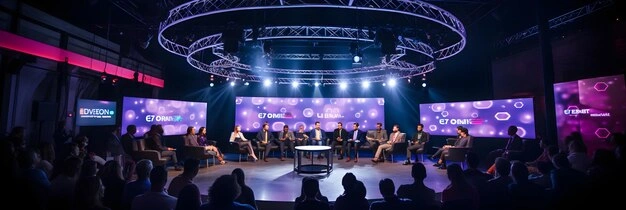
With the growth of immersive and technology-powered events, there arises the need for consideration of the digital dimension as well. With the rise of the role of technology in events, security risks associated with the digital structure have started to shape event design and protection. The risks arising from cybersecurity issues related to event technologies' security can easily turn into major disruptions.
It becomes apparent that cybersecurity at events is no longer a niche issue but rather the primary focus point. Alongside this, data security at events has gained prominence because of the integration of user information into digital technology. This becomes particularly relevant when discussing hybrid events.
By 2026, the event security strategy will go beyond defensive mechanisms and become one of the key elements during the conception and creation of an event. No longer a secondary factor, security is considered during event planning processes and impacts both the experience and perception of the event. Leading companies consider corporate event security a crucial component that directly affects the success and experience of an event.
For events to be successful, corporate event security solutions need to be approached at an early stage as part of foresight and strategy building.
By 2026, readiness will mean everything. Event contingency planning in the future will no longer be a process initiated days before the execution of the event; it will start from the initial event risk assessment that goes deep enough for effective mitigation measures. Predictive models and scenario planning are now being applied more widely, making it possible to prepare for anything in advance. Such an approach is becoming an essential part of crisis planning for events.
It means that from small problems to major disasters, everyone will always be ready for everything, thanks to proactive thinking. This way, risk planning will enable people to think ahead and be ready for any challenges rather than react to them after things get out of control.
It is important in high-risk event settings to have full visibility of what is happening on site. It is now crucial in the seamless delivery of events to have event monitoring, which takes place within an event command center approach. This involves having a system that allows for tracking movement in all levels of operation. This will be made possible by leveraging smart event management systems along with event analysis using artificial intelligence. It creates a system of quick response to any problem that may arise. The future event operations risk management will be proactive, not reactive. In 2026, control means intelligent response.
As much as technology improves capacity, it is the readiness of humans that dictates success. With the current scenario, there needs to be more emphasis on preparing individuals in teams regarding their safety during events, as well as plans to deal with emergencies in evacuation and crisis planning.
Such preparedness means that team members will be ready to respond with urgency while still responding effectively. In this regard, coordination becomes easier. Moreover, the resilience within the management of such events is boosted. For any crisis management event to be successful in 2026, it will be based on people trained in handling such situations.
With the scope of events increasing, scale can be an advantage as well as a liability. By 2026, managing crises for big events will go beyond being a specialized activity; it will be crucial to event planning and execution. Events that range from international summits to multicity events all call for high-level planning and organization.
The greater the scale of such events, the more complicated they become, in terms of logistics, participants, and infrastructure, among others. All these factors have a direct bearing on safety, which makes it vital to consider what kind of effect a scale may have in every phase of the event's implementation.
In terms of sheer scale, movement emerges as one of the most essential factors when it comes to ensuring event safety. Crowd control management is not just an issue of regulating numbers; it involves knowing about crowd behavior and reaction as well. The use of predictive modeling and behavioral analysis is becoming a common practice when planning for event security for large-scale events.
It helps improve crowd entry and exit plans and ensures minimal crowding and quick response to unusual situations. This is especially important when dealing with event safety in the case of immersive experiences. By 2026, crowd control management will be more about informed decision-making than mere action.
Big events are complex systems where many stakeholders, vendors, sponsors, local governments, and even staff members are involved. In such situations, efficient stakeholder coordination for events is necessary to ensure that everything runs smoothly.
The absence of effective communication and responsibilities will result in a small mistake snowballing into a major issue, making efficient coordination vital in ensuring that all stakeholders remain on the same page, literally and metaphorically. When managing an emergency, coordination allows for quicker decision-making. In 2026, organizing any event requires more than planning, but efficient coordination too, along with greater strategies.
The more complex events become, the more vital technology becomes in facilitating scalability. With the use of sophisticated systems, such as real-time dashboards, automation systems, and AI systems in event security, event planners are able to streamline the operation process effectively. The use of predictive risk intelligence will enable planners to predict problems even before they happen, which can help them address those issues proactively. This is what technology does for the management of scale today. In 2026, technology will be indispensable in facilitating scalability because it helps to keep everything under control without any complications.
By 2026, crisis management will not only consist of technology and processes but also include emotions, sensitivity, and human nature. A sensitive approach to human-centric crisis response is vital and should be used to understand not only how to manage these but also how people experience them and what impressions they will carry with them in memory. This means that one should focus on managing a crisis in terms of human nature and emotions. Communication can become the most important tool here since its effectiveness lies in sensitivity.
With a world characterized by instant communication, room for late reaction has become nonexistent. Crisis communication in events has, therefore, become an affair that has to be instantaneous, clear, and characterized by empathy. With information getting around instantly, it becomes crucial that event organizers follow certain guidelines when it comes to event crisis communication. This entails knowing what to do in cases of crisis communication in the world of corporate events. The management of communication during a crisis has become one of the most important aspects of crisis management within the corporate world.
In light of this globalization of occurrences, the importance of cultural intelligence in event planning when it comes to event planning could not be more crucial. Events happen with audiences that have various opinions, concerns, and requirements. Understanding cultural, political, and societal issues will help deal with these complexities. When there are disruptions, the statements and how they are made may mean different things to different audiences. This means that cultural intelligence is important to ensure that people are handled in a respectful way. It is not enough for one to know how to plan and manage disruptions; it should be done within the context of cultural sensitivity in 2026.

Crisis management revolves around humans at all times. The creation of a positive attendee safety experience is rooted in reassurance, communication, and visible leadership amid uncertainty. More than anything else, what counts beyond all policies is the reaction and feelings of your attendees during an emergency situation. It is vital to provide clear instructions; maintain composure through communication; and give support emotionally, which is precisely how event planners handle emergencies, among other things. In 2026, focusing on the human element when managing responses to an emergency guarantees the safety and control of your event regardless of circumstances.
Today, technology plays a crucial role in the anticipation, management, and response to disruptions that may occur during events. In spite of the new weaknesses that technology creates, it provides valuable instruments for enhancing resilience. The use of automation technologies, along with the development of an integrated system, transforms processes of event contingency planning checklists into something more effective.
Nevertheless, the greatest transformation that technology has introduced into crisis management is related to foresight. The use of data-based systems and the development of predictive risk intelligence enable organizers to respond quickly and effectively to potential risks.
In 2026, the advent of artificial intelligence has ushered in an era where events predict and cope with emergencies in entirely new ways. With the aid of AI-driven event analytics and behavioral insights, organizers have the ability to detect anomalies and risks at an early stage and address them accordingly, thus enhancing safety and operational efficiency. Predictive risk intelligence adds another dimension to this process by offering organizers the ability to mitigate risks proactively, not reactively. Whether it be in predicting crowd behavior or detecting security issues in the online space, artificial intelligence makes it easier to chart risks and address them on time.
The flow of information is important when handling complicated events. The unified data systems will combine data from the operation process, security, and attendees. This helps in making decisions since the process is done without errors, because the decision made will be based on accurate information. With unified data systems, the risks that are involved in the operations will be handled effectively, thus reducing miscommunication among the stakeholders. The real-time decision-making tools, such as dashboards, alerts, and the monitoring tool, will ensure that the process runs smoothly without any obstacles. It is necessary to have decision-making abilities by 2026.
As events embrace a more digital approach, there have been increased efforts geared towards ensuring that cybersecurity becomes a top concern. It ensures the protection of the various event infrastructures, platforms, and valuable information through cybersecurity protocols within the event technologies. This will help protect both the attendees’ personal information and ensure operational stability through minimizing any risks of disruption. This will ensure compliance with event safety regulations. Cybersecurity in events is just as essential as physical security for hybrid and digital events. In 2026, cybersecurity will play a pivotal role in ensuring safe events.
In 2026, event planning needs more than just reactionary processes; rather, it needs an intelligent strategy. An effective crisis management model for events in 2026 gives event managers the ability to be prepared, to plan for any situation that could become a crisis, and to know how to handle it accordingly. Proactive systems will recognize any weaknesses, scenario map any situations, and put together clear protocols, and adaptive models allow event managers to deal with situations as they evolve. With such a model, event managers can be proactive and strategic about their event experience.
One essential element of contemporary event planning is the anticipation of any disruptions prior to their occurrence. With the use of advanced risk assessment tools for events, it becomes possible to spot weak points in regard to the physical environment, information security, and operations. As a result, it will be feasible to carry out effective scenario mapping and visualize potential threats. Thus, it is important to have some level of foresight when it comes to strategic event risk management since a risk-based approach implies an organized solution to identified hazards. The use of scenario planning will allow managers to come up with customized solutions and minimize any disruptions.
Effective crisis management requires an orderly system and accountability at all times. Clear roles and hierarchies must be outlined within the organization to facilitate effective crisis response strategies at conference and exhibition venues. In so doing, the organization will achieve greater efficiency through improved communication processes during the occurrence of any emergency situation. The establishment of such a protocol within the organization provides planners with an effective response strategy whereby small emergencies will be contained before they evolve into crises. In 2026, the development of an effective chain of command protocol is key to effective crisis management within the organization.
It cannot be overemphasized how important it is to have clarity and accountability in any crisis. Creating a hierarchy within a crisis response strategy that defines the roles of team members helps ensure that there will be a quick response to problems that may arise in conferences or trade shows, and everyone involved will know exactly what their responsibility is. This way, there will be no room for misunderstandings and delays. It is also easier for the team to coordinate among themselves and make decisions. Having a clear chain of command is essential for making fast decisions without allowing smaller problems to turn into a real disaster.
It cannot be overemphasized how important it is to have clarity and accountability in any crisis. Creating a hierarchy within a crisis response strategy that defines the roles of team members helps ensure that there will be a quick response to problems that may arise in conferences or trade shows, and everyone involved will know exactly what their responsibility is. This way, there will be no room for misunderstandings and delays. It is also easier for the team to coordinate among themselves and make decisions. Having a clear chain of command is essential for making fast decisions without allowing smaller problems to turn into a real disaster.
The ability to learn from all experiences is critical for ensuring resilience in events. Once an event has taken place, analysis of any incidents, near misses, and operational issues can help planners to improve their strategy and make refinements to their systems. Through this, they will be able to improve their event contingency planning by refining processes and implementing training that addresses any weaknesses. The incorporation of a learning loop will help ensure that the organization has a better capacity for responding proactively during future events. Resilience in 2026 in event management will not only involve planning and delivery but also post-event reflection.
In the year 2026, when there is a heightened demand for professionals who are capable of providing crisis management services in the event management industry, Oh Yes Events will take up not only the role of the executioner but rather that of the strategist of resilient and forward-thinking events. Foresight in the ideation process is a key component in ensuring that every idea is thought out, considering the risks, security, and participant experience. As such, the foresight approach adopted by the agency guarantees that disruptions can be foreseen, thereby guaranteeing smooth delivery and client confidence. This is indicative of the agency's aim to deliver corporate event solutions provider-level excellence across every touchpoint.
The main pillar of the foresight strategy adopted by Oh Yes Events for planning events is security integration in the event planning process, coupled with innovative technology and efficient operations. In its capacity as one of the best event planning and execution agencies, Oh Yes Events adopts real-time monitoring and predictive intelligence for the purpose of executing events of any magnitude in a manner that ensures safety and compliance.
Just as important is the focus of the agency on human-oriented approaches. Through effective communication during the crises and sensitive operational policies, Oh Yes Events makes sure that its attendees are empathized with and made aware at all times. Known as one of the best corporate event planners in India and active in various regions, such as Mumbai, Bangalore, and Chennai, the agency maintains a high standard of performance as one of the top experiential event agencies in India and one of the best MICE event planners in India.
With the changing dynamics of the events industry, crisis management within events has now become a significant determinant of success when providing safe and memorable experiences for participants. It is the organizations that embrace a robust strategy, technology, and people-centric approach to crisis management in their events that will succeed in the coming years. For an event management firm operating in India and globally, one must incorporate event safety measures, event contingency plans, and event security strategies to build credibility and trust within the brand.
Knowledge on how to ensure the safety of public events is more than preventive action but readiness and adaptability to any situation. Organizations such as Oh Yes Events are setting the trend by embracing these qualities and guiding companies to navigate the complexities involved in managing their events. The events in 2026 will be successful not because they will have fewer challenges but because they have the capacity to handle them with ease.