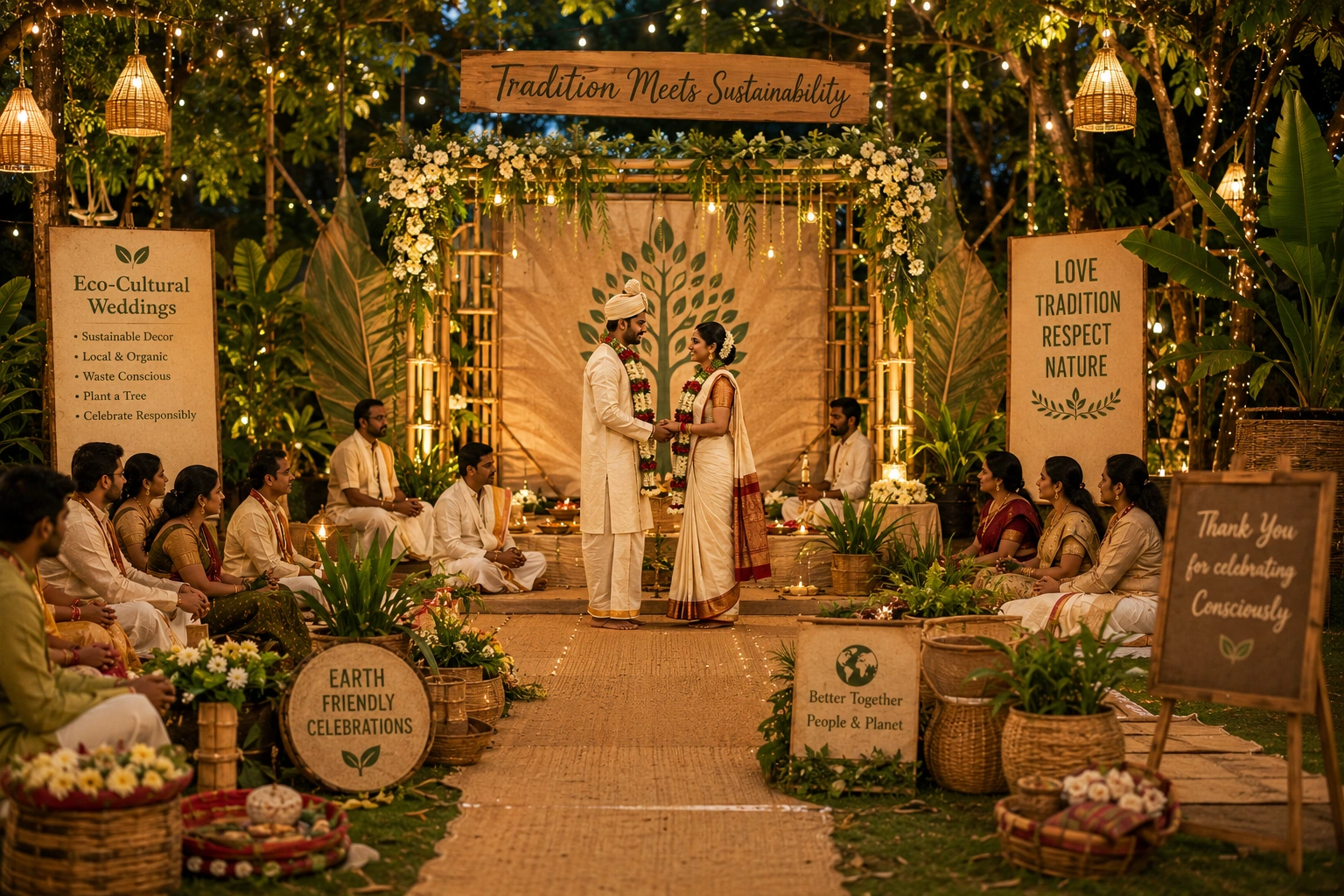
A sustainable era that combines tradition, culture, ecology, and emotion is emerging within the Indian wedding market. In 2026, there will be no room for extravagant celebrations. In 2026, couples seek weddings that are emotional, intimate, authentic, and environmentally friendly. The combination of heritage and sustainability creates an experience that brings emotions and contributes to social responsibility. Thus, eco-cultural weddings, which are gaining popularity, have become a perfect embodiment of all the values that contemporary people pursue.
Couples who care about the environment choose eco-friendly Indian wedding ideas. They plan zero-waste weddings and strive to make the ceremony as environmentally sustainable as possible. An immersive wedding experience with an understanding of tradition is becoming an increasingly popular trend in the industry. In addition to wedding trends in India 2026, eco-wedding concepts include ethical wedding ideas that are not associated with any harmful effects on the environment.
Thus, the concept of conscious luxury is emerging on the market. Modern events emphasize authenticity and uniqueness while paying attention to local heritage and engaging guests in celebrations. Leading experiential planners like Oh Yes Events are increasingly responding to this evolution by curating culturally rooted celebrations that balance artistic sophistication with sustainability-driven thinking.
In conclusion, in the future, indeed, it can be argued that the key direction in which the weddings of India will evolve in the coming decades will be the creation of memorable events that feel timeless and emotionally intelligent, at the same time maintaining an authentic connection with nature and people.
It may sound obvious to mention that the increasing popularity of eco-conscious luxury weddings is a consequence of the overall development of wedding culture in the country and not simply a passing fashion. The new generation of brides and grooms is more environmentally friendly, conscious about resource usage, and interested in the emotional aspects of celebrations. Thus, weddings are gradually losing their excessive format and acquiring an increasingly meaningful one.
In a sense, the emergence of intentional luxury weddings can also be regarded as a reinterpretation of the concept of grandeur in modern events. In the future, luxury will not necessarily mean lavish scale but rather high-quality curating, authenticity, hospitality, and emotions.
Needless to say, the demand for sustainable wedding decor, eco-friendly wedding decor, and reusable wedding decor options is rapidly growing among contemporary couples who wish to celebrate their special day in a way that reflects their lifestyle without making compromises on style. On top of that, the growing trend of boutique destination weddings, immersive destination wedding experiences, and bespoke weddings serves as another reason to go green. All in all, sustainability is becoming a reality in the world of wedding planning in many aspects.
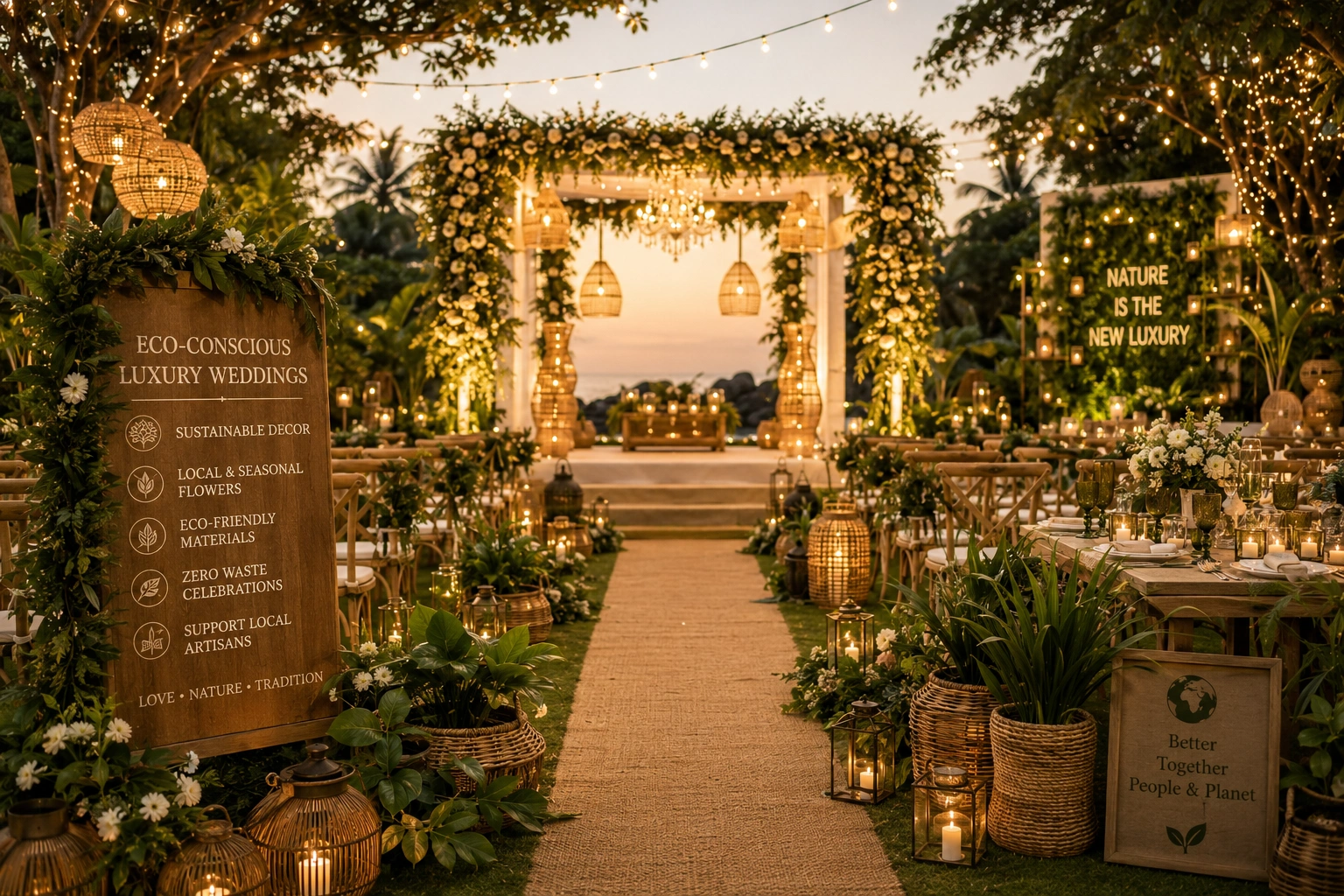

The perception of luxury within the Indian wedding market space is changing drastically. By 2026, there will be a move towards experience-led weddings that revolve around emotions, culture, and guest experiences rather than extravagant designs. Scale is no longer the most important factor for creating lavish celebrations; instead, the emphasis will be on the emotional value that comes from experiencing a personalized, intimate wedding.
Such an approach is helping the rise of emotionally driven events and intentional celebrations where each aspect of the wedding, including the design, rituals, and interactions with guests, reflects the personal stories of the newlyweds. Wedding celebrations in India become multi-day formats focused on regional experiences and cultural interaction.
Overall, the market of luxury wedding experiences in India is becoming more experience-oriented and immersive as the newlyweds choose a celebration design that is not about following trends or creating excessive, yet emotionally meaningless, extravagance.
Conscious luxury movement is gaining popularity in the future of Indian weddings. Couples of 2026 will redefine luxury based on sustainable practices, quality craftsmanship, and conscious production.
There is an increasing trend towards eco-luxury weddings, which have led to the inclusion of sustainable experiential luxury within the industry. Modern luxury weddings of today integrate ethical sourcing of wedding materials, local decor, recyclable production methods, and sustainable hospitality options.
On the other hand, modern luxury Indian weddings have become increasingly refined in terms of storytelling strategies. Rather than relying on visual grandeur, there is an emphasis on creating an authentic experience for guests that is driven by emotions and immersive senses. This is particularly prominent in the trend towards experiential wedding industry trends.
Every eco-cultural wedding is based on an ideology of intentionality whereby any creation and operation will be meant to maintain harmony between emotional values and environmental sustainability. It should be known that sustainability in weddings does not necessarily mean simplicity and the minimization of luxuriousness in weddings. Rather, the luxury of the modern era can best be defined by sustainability, authenticity, and experience of meaning and culture.
Today, couples are leaning towards adopting modern heritage weddings that entail the celebration of traditions with a focus on contemporary, sustainable weddings. These weddings feature the use of authentic, locally sourced materials and decoration designs, as well as environmentally friendly and community-sensitive hospitality systems. Today, modern brides and grooms are more concerned about experiencing their weddings rather than decorating extravagantly.
The new trends in conscious luxury and intentional event design are leading to a change in the conception and organization of weddings all over the world. In this age, couples want to preserve cultural memory while ensuring minimal ecological footprint in their weddings. In conclusion, the eco-cultural wedding concept is founded on neither simplicity nor minimalism. Rather, it focuses on meaningful decisions regarding the celebration of heritages and cultures sustainably.
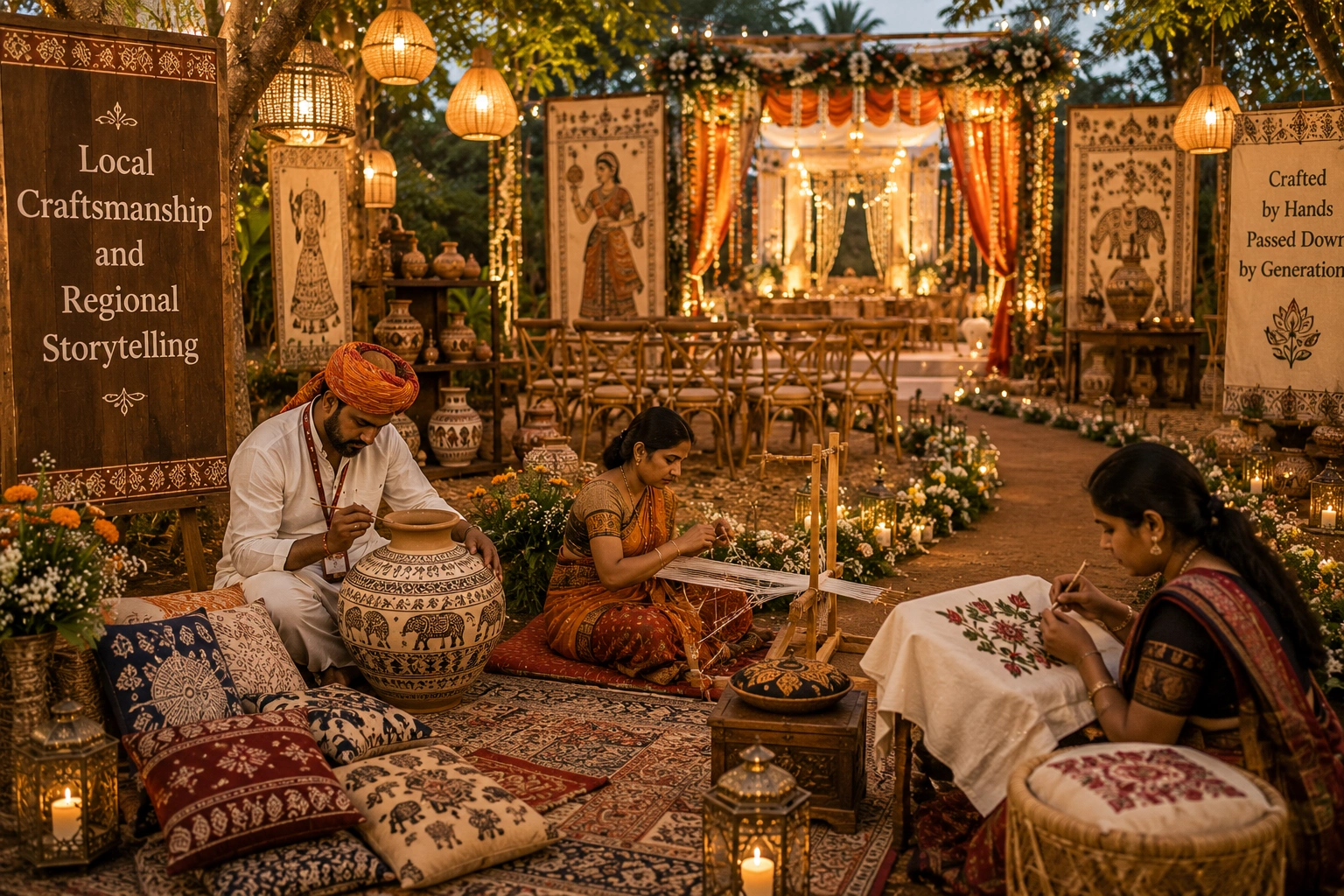
Among some of the distinct features of the current ecocultural weddings are their increased focus on region-specific stories told through wedding designs, decorations, and craft details. In 2026, weddings have become increasingly focused on the revival of traditional artistry in luxury weddings as a means of designing a celebration that would evoke emotional authenticity, cultural immersion, and connection with one's heritage.
This development has led to the revival of traditional elements that form the aesthetic basis of current wedding design. Such aspects as artisanal wedding decor, woven fabrics, use of brass details, terracotta decor, and other craft details inspired by the traditional wedding culture have gained great prominence in today's wedding design trends. Moreover, the growing popularity of the handloom wedding aesthetic is the manifestation of such a tendency.
In addition to enhancing the overall heritage wedding aesthetics and effect of wedding decorations, this choice promotes indigenous artisan communities and helps preserve their craft heritage. In this regard, weddings evolve into cultural experiences wherein storytelling is an integral aspect of guests' experiences.
In 2026, sustainability becomes a major contributor to the luxury look of weddings, especially when it comes to decorations and wedding planning as a whole. Reusable event architecture that can be reused multiple times; modular wedding installations and circular event systems are just some of the ways planners strive to minimize wastage while keeping the impact on guests at its maximum.
Moreover, new trends in eco-friendly luxury wedding decorations lead to even greater emphasis on authenticity and natural décor choices. Earthy colors, decorations created from natural textures, bamboo frames, fabric draping, and local elements become an important part of modern designs. The use of bamboo wedding decor and modular event staging systems has become one of the defining characteristics of luxury wedding production trends.
There are also changes occurring when it comes to flower decorations. For example, flower repurposing, sustainable flower arrangements, and seasonal flowers all contribute to this development within the Indian wedding industry.
Food and hospitality services have become two key elements of sustainable hospitality in modern Indian weddings in 2026. The need for a well-curated menu that takes into account the principles of sustainability and cultural awareness is on the rise. Among other things, weddings that include farm-to-table menus, hyperlocal dishes, and the experience of region-specific cuisine are becoming more popular today.
Besides, catering services are becoming increasingly eco-friendly by offering food experiences that minimize excessive consumption and food waste. The use of traditional food service formats like dining with banana leaves and locally produced menus will remain relevant for eco-conscious guest hospitality.
What is more, the concept of sustainable hospitality management systems that include the redistribution of food, sustainable food practices, and energy-efficient operations is becoming increasingly widespread among hotels. Thus, sustainable catering solutions are contributing to making weddings eco-conscious without giving up luxury or quality.
The Indian wedding scenario in the year 2026 has seen considerable changes from previous decades, as well as from a few years ago. There has been a move towards making the Indian wedding more about authentic emotions, deep cultural roots, and stories of the couple themselves. There has been less emphasis placed on following wedding formulas or using standard decor elements. This change is affecting modern wedding design by moving away from formulaic decorations to a focus on more emotional aspects of weddings.
The increased interest inculturally immersive weddings means that contemporary wedding designers have a unique challenge of designing weddings that make the event seem less like an act and more like something real. In this way, there is a desire to go back to traditions and create wedding designs based on emotions and family connections rather than trends.
In addition, many contemporary couples today find themselves embracing regional art and culture and creating immersive decorations that help them tell a story about themselves. Modern wedding design involves a fusion of heritage and contemporary culture to make the celebration special. In conclusion, the modern wedding experience is becoming much more personal and emotionally intelligent due to heritage transformation into design languages
The destination wedding trends in India are transforming the wedding venue and guest experience selection in the year 2026 in the Indian context. Contemporary weddings are now more inclined towards destinations that offer cultural richness, natural surroundings, and experiential opportunities, rather than being confined to the usual traditional banqueting arrangements. Palace venues, heritage resorts, beach resorts, and forest resorts have become very popular wedding destinations due to their ability to provide an emotional and immersive setting.
Immersive destination-based hospitality experiences are providing a sense of intimacy and natural surrounding connections, along with reducing dependency on elaborate production techniques and minimizing resource wastage. This change is making substantial contributions to the increasing popularity of boutique destination weddings that focus on individuality and sustainability.
Boutique destination weddings are gaining popularity because of the personalized and sustainable nature of the celebrations organized by the couples in collaboration with local culture and scenic surroundings.
The trend of treating the rituals as immersive experiences that engage guests emotionally is becoming more prevalent for Indian weddings in 2026. Instead of treating ceremonies as mere traditions, couples are adopting a ritual-based celebration of their union by adding an element of storytelling, family history, and emotional connection.
In this regard, the new design trend suggests approaching ceremonies through the prism of cultural storytelling through design, where decor, space styling, and symbolism take part in creating an emotional story related to the couple celebrating their love.
Memory walls, local design, unique ritual areas crafted by hand, and interactive ceremonies are just some ways in which Indian weddings in 2026 can become more immersive, emotional, and meaningful
Another factor contributing to the popularity of personalized wedding rituals is a growing need for more authentic and individualistic celebrations in 2026. In this way, couples will find the best ways of adopting traditions to suit their needs better. In light of this, culturally intelligent celebrations seem to be the next step in Indian weddings in 2026.
It can be argued that technology will play an increasingly important role when it comes to planning and designing sustainable weddings in the year 2026. In this regard, technology helps planners design weddings that are all three: efficient, personalized, and sustainable. Unlike the past, where technological innovation played a peripheral role, it is now seen as the infrastructure of the wedding industry.
From guest management to logistics and production management, digital innovation makes it easier to execute weddings with efficiency, elegance, and style. Innovations such as digital RSVPs, QR Wedding Management, and paperless wedding communication systems have made it easier for planners to cut down on unnecessary wastage.
In addition, the use of technologies such as AI wedding logistics and Smart wedding production management has helped make it easier to coordinate the transport, scheduling, and even inventory for weddings. These innovations have been key in driving other sustainable technologies and wedding practices. Celebrations have become increasingly experience-driven, which means that more wedding planners have embraced digital innovation in order to create a more seamless and immersive wedding celebration process.
The introduction of circular inventory systems is dramatically changing the operational paradigm in contemporary weddings. By 2026, companies will be putting an increasing effort into creating their inventory of décor assets, modular staging systems, and other infrastructure components, which will allow them to adopt sustainable event production practices for many years to come.
The increased popularity of zero-waste wedding trends is making wedding planners pay closer attention to designing installations and decorations that are able to be reused or transformed during different events. The use of modular construction solutions and inventory systems becomes key to creating future-facing weddings.
In addition, the growing importance of carbon-neutral weddings is making wedding planners reconsider transportation logistics, energy consumption, and collaboration with vendors from the perspective of greater sustainability. Sustainable practices become not merely a symbolic choice but rather an operational one, which is reflected in scalable systems in wedding planning and execution.
Technology is revolutionizing wedding organization through guest experience management, enhanced communication, and improved efficiency. In 2026, digitization is playing a key role in producing immersive yet sustainable weddings. Digital technologies like digital RSVP, QR-based wedding management, and paperless wedding communication have enabled wedding planners to minimize wastage while providing guests with a more streamlined experience.
\';[pIn addition, these new technologies are making the process of inviting guests, managing their seats, producing itineraries for the events, and ensuring hospitality more convenient than ever. While doing all this, technology is facilitating improvements in logistics and wedding production through AI-based tools and systems. Guest movement and schedule optimization, along with vendor coordination, can be done more efficiently through technology.
On top of making the planning process easier, technology is facilitating sustainable wedding production by minimizing wastage through efficient planning. Weddings have evolved into immersive experiences, making it crucial to integrate digital solutions to produce low-waste, personalized, and forward-looking weddings.
With the wedding industry moving towards sustainability, cultural stories, and immersive guest experiences, the importance of experiential planners in the sector will be significantly increased. The modern couple does not need logistics anymore, but creative teams that would be able to develop emotionally intelligent events that would make sense in the future and would have their own stories.
Thus, Oh Yes Events is preparing itself to face the new era in the Indian wedding industry by integrating the principles of experience creation, hospitality management, and cultural storytelling to help the clients design memorable weddings in India.
The core idea of the approach to event design is related to the need for intentional and human-centric celebrations. Instead of sticking to some kind of formula and creating the same event again and again, it is crucial to provide customers with an experience that would be unique and emotionally intelligent for them.
It is important to mention that it seems to reflect the transformation of sustainable Indian weddings in 2026. From the green decor concepts for Indian weddings and sustainable hospitality concepts to cultural wedding experiences in India, the current wedding scene can be best described by personalization and thoughtful planning. This involves incorporating local artwork, modular production processes, sustainable floriculture, and personalized guest experiences.
Oh Yes Events is one of the newly established names that specializes in luxury wedding productions and experiential event companies in India's industry talks. It operates under an ethos that revolves around emotion-based storytelling, precision operations, and celebratory design.
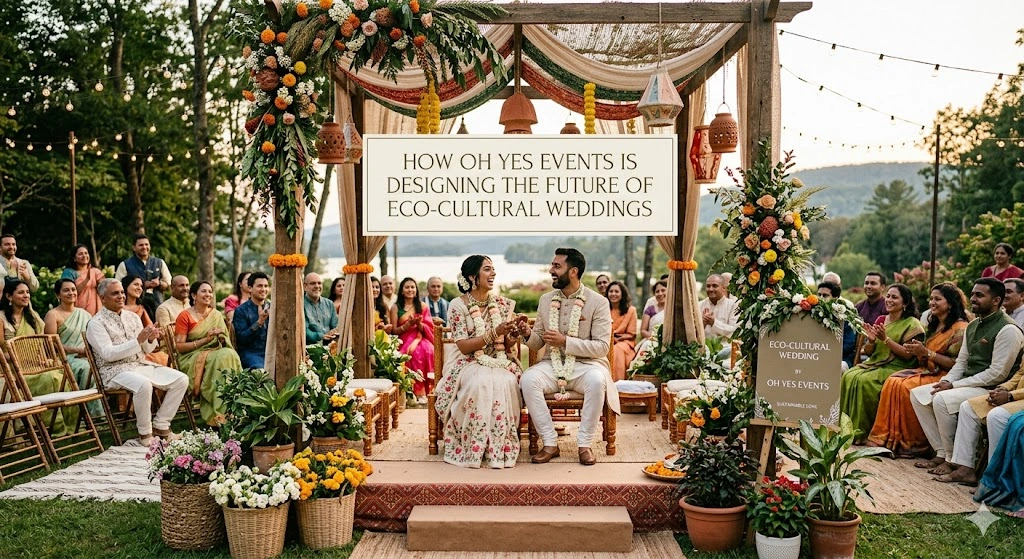
The future of Indian weddings no longer revolves around the size of the celebrations or grand spectacles. Rather, what is taking shape is a celebration of intentionality, sustainability, stories, and culture. Eco-cultural weddings represent a trend in which Indian wedding planners aim to design events that are immersive and socially conscious.
The development of luxury wedding ideas for 2026 shows how sustainability has been incorporated into wedding events through design, hospitality, decoration, production, and engagement with guests. Similarly, sustainability is transforming luxury weddings and proves that elegance does not contradict environmental responsibility.
Eco-friendly luxury wedding ideas for modern Indian couples have brought about increasing interest in cultural wedding planners in India. In other words, the future of the wedding industry lies in celebrations that promote regional culture, emotionality, and thoughtful production.
Overall, the solution to how to organize an eco-cultural wedding in India involves combining heritage and innovation, as well as aesthetics and responsibility. As such, modern Indian weddings inspired by culture and sustainability represent the hallmark of the new decade.
The future of weddings will definitely be defined by events that are less theatrical and more personal. With companies such as Oh Yes Events discovering new realms of sustainability and experiential luxury, there is little doubt that the event industry is gradually progressing towards celebrations that build legacy rather than just memories.