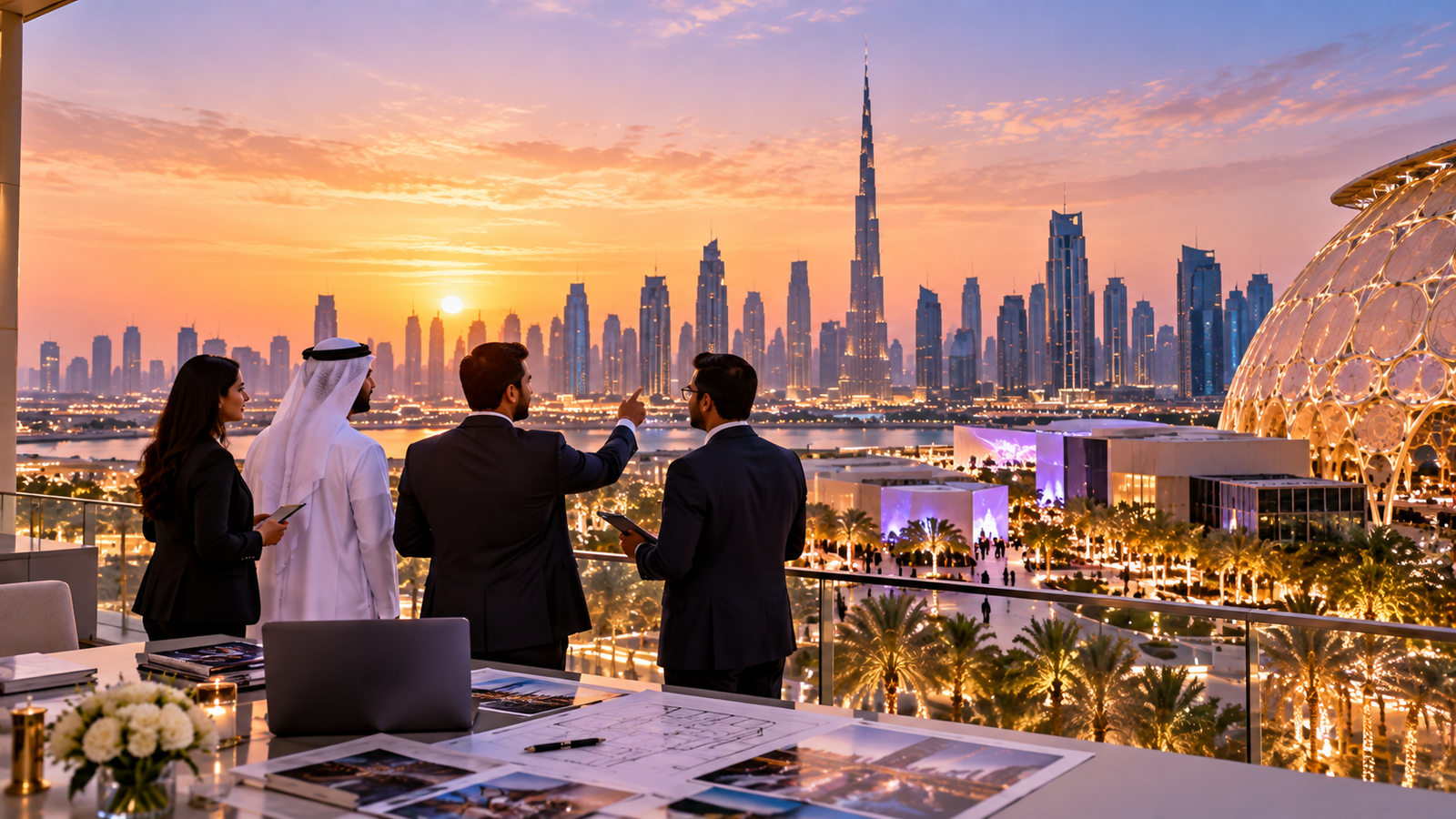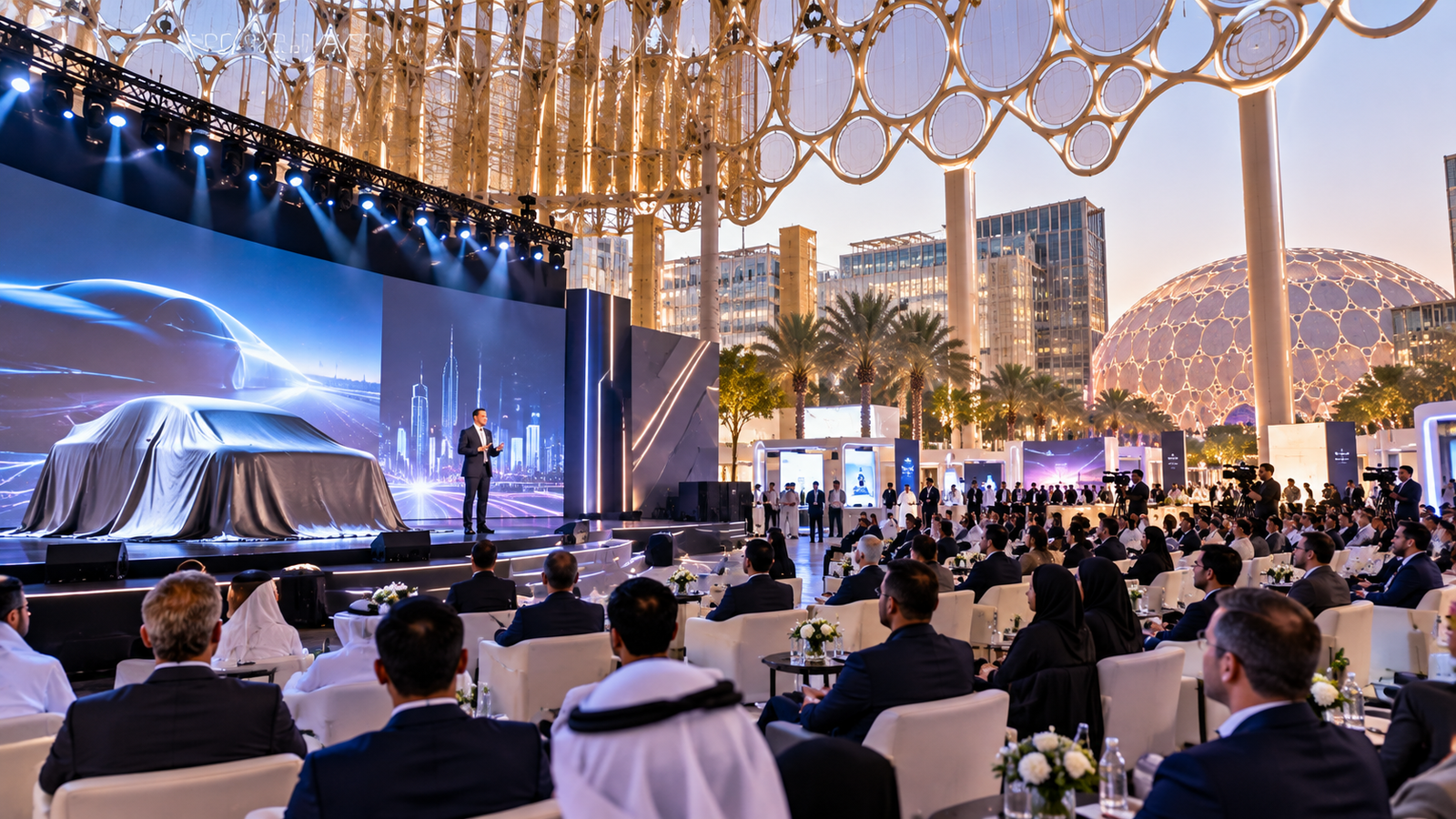
Most venues in Dubai are buildings. Expo City Dubai is closer to a small city: wide plazas, a landmark dome, exhibition halls, a metro station, and enough open space to be almost any kind of event from scratch. It appeals to brands, and that can trip up first-time planners. The same freedom that lets you stage a cinema product reveal under a 360-degree projection dome also means you are making dozens of decisions a standard hotel ballroom would have made for you: layout, guest flow, power, weather backup, transport, and how thousands of people get from one place to another without losing the energy of the day. This guide is for marketing heads, founders, and event teams planning product launches, conferences, and brand experiences at Expo City Dubai, including Indian companies entering the UAE market and wanting to land their first big moment properly.

Before you start comparing spaces, it helps to understand what makes this destination different from the usual Dubai conference circuit.
Expo City Dubai grew out of the Expo 2020 site, and it still carries that DNA. Infrastructure that was designed to handle millions of visitors, such as wide walkways, large plazas, mobility links and a purpose-built layout, now serves corporate and public events. For planners, that means fewer compromises on scale than you will find in a hotel or a conventional convention centre.
The campus sits in Dubai South and has its own station on the Dubai Metro Red Line, which makes it easier to move delegates, media and guests without relying entirely on cars. Expo City also describes a wide range of event spaces, from the central plaza to meeting venues and outdoor areas, so that one campus can host several parts of the same program.
The dome, the water features and the architecture give brand teams something rare: a backdrop that does half the creative work. For launches that rely on social media coverage, press photography and video, that matters more than most budgets admit.
The dome is the image most people have in mind when they think of Expo City, so it is usually the first question clients ask about. It deserves a clear-eyed look.
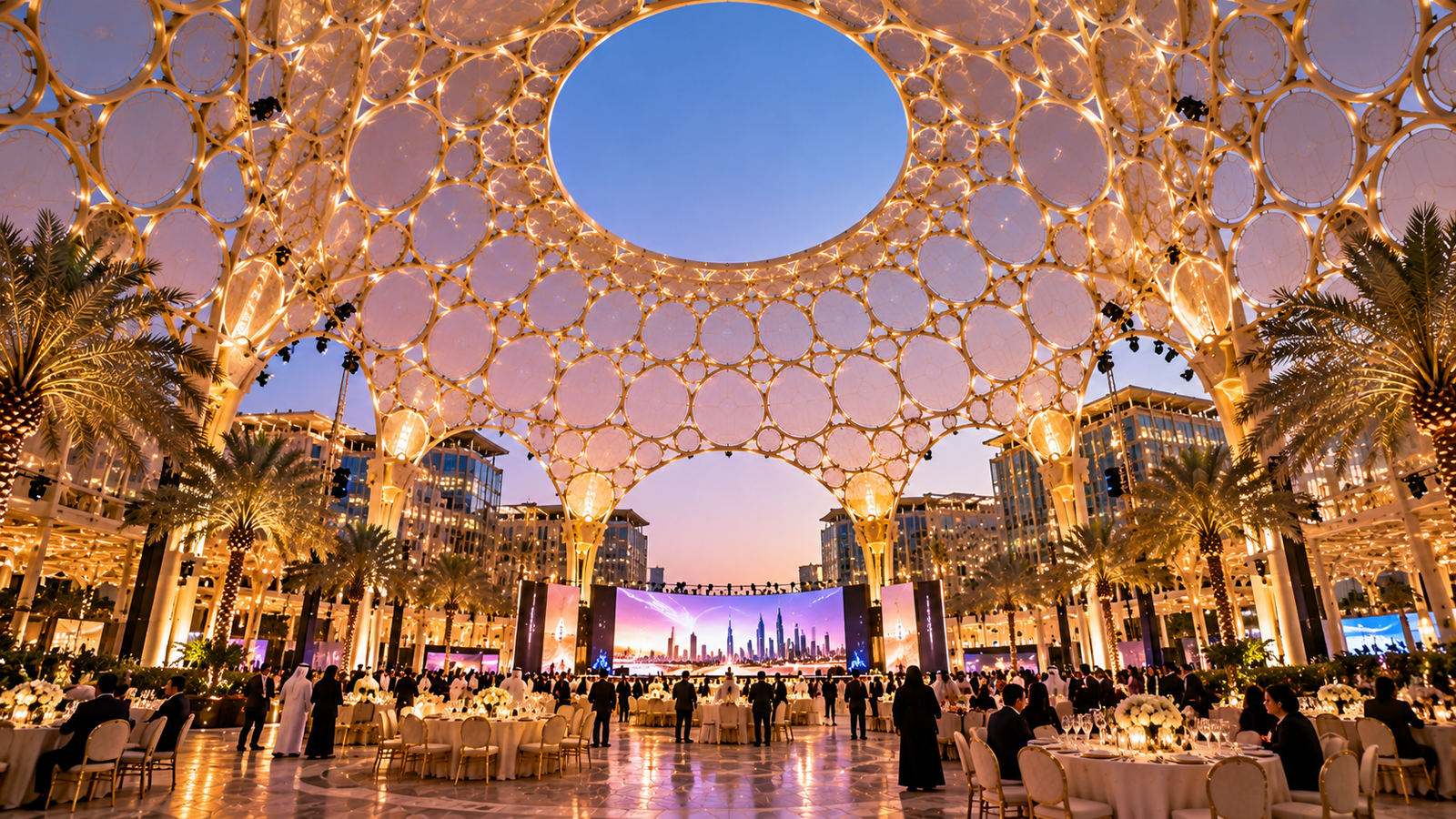
Al Wasl Plaza sits under a steel dome roughly 130 meters across, with a 360-degree projection surface that turns the whole structure into a canvas after dark. It is semi-open and not a traditional arena. There is no permanent seating bowl, so seating, staging, sound and sightlines are all designed per event. Public information on the space puts crowds of up to around 10,000 for suitable configurations, but the right number for your event depends on format, safety requirements and what you are building inside it.
The plaza shines for events where atmosphere is the product: a major product reveal, a brand anniversary, a gala dinner, a media moment, or a launch meant to be photographed and shared. If you want your audience to feel they have arrived somewhere, the dome does that before a single speaker walks on stage.
Because the space is semi-open, summer heat, wind and humidity affect comfort, and sound behaves differently than in a closed hall. A conference with long presentations and detailed slides may be better suited to a controlled indoor space. Planning an event here without a weather plan, acoustic plan, and cooling plan is how good launches go wrong.
If the dome is about the atmosphere, the Dubai Exhibition Centre is about capacity and function. The two serve very different needs.
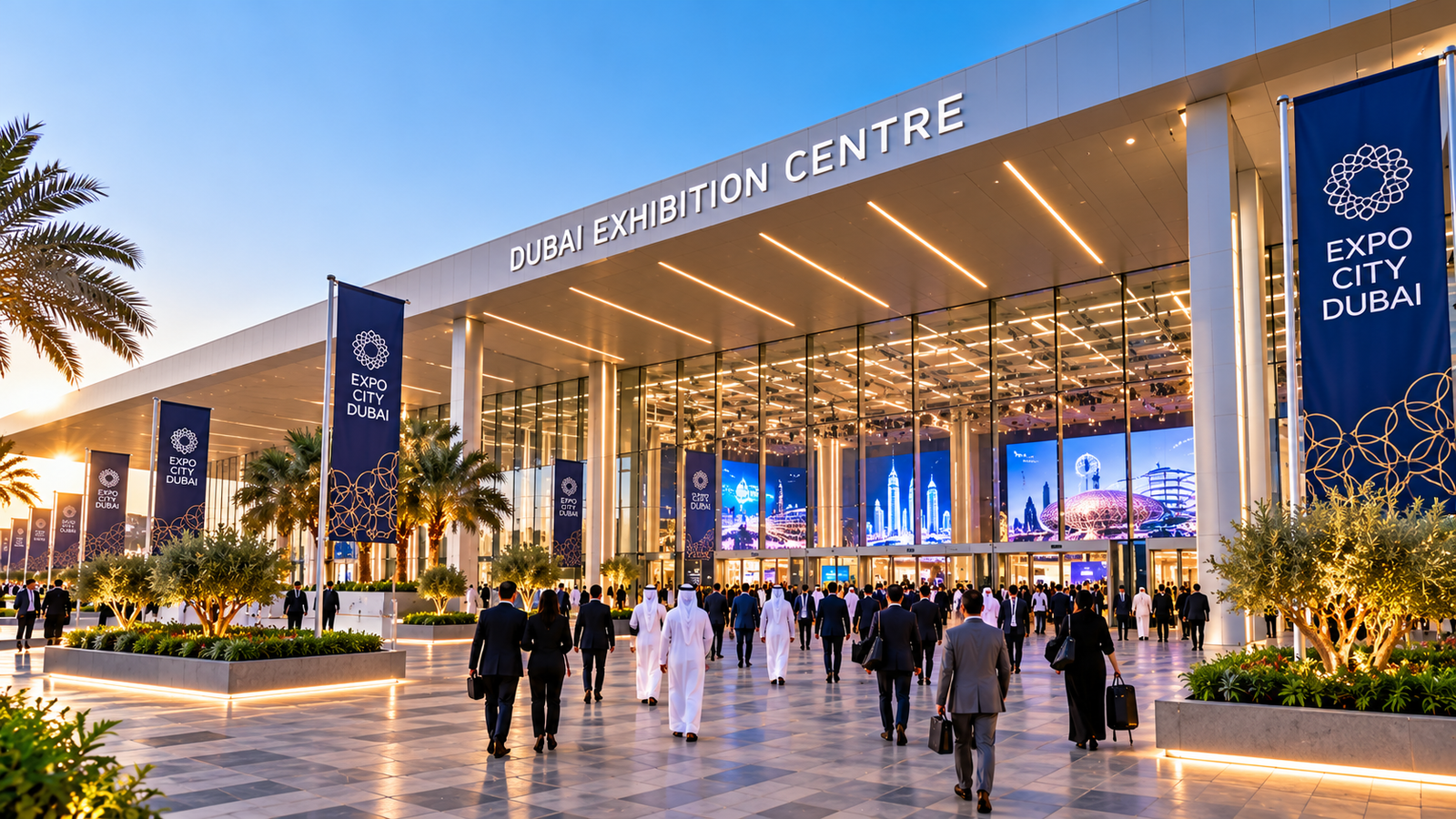
The Dubai Exhibition Centre (DEC) is being expanded in phases as part of a multi-billion dirham plan run by the Dubai World Trade Centre. According to reports, Phase 1 was delivered in early 2026 and was used by large trade events that year. The headline figure of 140,000 sqm of event space includes temporary pavilions that were reported to return to construction afterwards, while later phases are still being built. In practice, that means the venue is operating and growing at the same time, and the space available to you depends on dates and construction schedules. Always confirm what is available for your specific event date, not just what is announced.
Halls designed for exhibitions give you column-free space, strong loading access, power and the ability to run multiple zones together: a keynote area, an expo floor, breakout rooms and a hospitality lounge. For conferences with exhibitors, sponsor booths and thousands of delegates, this is usually the more practical setting.
DEC sits beside the Expo 2020 metro station, with pedestrian links connecting to the wider Expo City campus. For delegates, this is a real advantage on peak days when road traffic is heavy and parking is stretched.
When clients ask which one to pick, we usually start with the objective of the event, not the venue. Here is how we think it through.
Your launch depends on spectacle, storytelling and visual impact. You want a hero moment, a show-style reveal, immersive projection and a standout evening. You are comfortable planning an outdoor or semi-open environment with a strong weather and comfort backup.
Your event is built around content, networking and scale. You need multiple halls, breakouts, exhibitor booths, registration areas and long programme days, with predictable climate control.
Some of the best events use both: a daytime conference in a hall and an evening reception or product reveal in the plaza. This is also where Expo City’s campus format pays off, because everything is within the same destination. It does demand tighter coordination, since you are effectively running two events with one guest journey.
This is the part most first-time planners underestimate. Large campuses create long walks, confusing wayfinding and tired guests, and they can quietly ruin a well-designed programme.
Think about how people actually arrive: by metro, by taxi, by shuttle, by private car and by chauffeur. Each path needs signage, staff and a clear drop-off point. Separate lanes for VIPs, speakers, media and general delegates prevent the bottleneck that usually forms at registration at 8:30 in the morning.
If your program crosses several spaces, plan transport and timing around the walking distances, not the map. Shuttles, golf carts for elders and VIPs, volunteer guides and clear signage all reduce friction. Build travel time into the agenda so sessions start when you say they will.
Heat, long days and big distances demand more than a coffee station. Plan shaded or air-conditioned rest areas, water points, food zones spread across the venue, and quiet corners for calls. Delegates remember comfort long after they forget the keynote.
For Indian brands, Dubai is often the first step in Middle East expansion. Your launch needs to do two jobs at once: introduce the brand and prove you understand the market.
A UAE audience is diverse: Emirati, Arab, South Asian, Western and global business communities all attend corporate events here. Content, hospitality and messaging should reflect that. Think about language, dietary requirements (including halal), prayer breaks for longer programs, and the right balance between Indian brand storytelling and local relevance.
Before a launch, you need clarity on your company setup, trade license, and any regulatory approvals for what you plan to sell or display. Expo City has a business support centre that deals with licensing and visa-related services for companies on the campus, and your legal and setup advisers will know what applies to your business. Treat this as a first step, not an afterthought.
A launch is only as good as its guest list. Plan early for local partners, distributors, media, industry bodies and potential clients, and think about how Indian delegates will travel and stay. A planner who has worked in both markets can help you build a list that actually fills the room with people who matter.
The glamour of the dome can distract from the dull but critical work behind the scenes.
Large events, amplified sound, special effects, drones, pyrotechnics, branding and catering usually involve approvals and venue rules. Timelines vary, so start early and get everything confirmed in writing. Your venue contact and planner will advise on what applies to your format.
Big launches need big technical planning: stage design, LED walls, lighting, sound, rigging, power distribution, backup generators, and show control. In a semi-open space, you also need cabling plans, weatherproofing and safety checks. Hold a full technical rehearsal before doors open, not on the day.
Large crowds require trained security teams, defined emergency plans, medical support and clear crowd-control measures. These are not optional extras. They protect your guests and your reputation.
Here are the questions we hear most often from marketing teams and founders.
Oh Yes Events is an ISO-certified event management company with operations in India and Dubai. We understand the way Indian companies think about launches, and we understand how venues in Dubai actually work. From venue selection and layout to production, guest flow and vendor management, we handle the logistics, so your team can focus on the message.
Expo City Dubai offers one of the most flexible and impressive canvases in the region, but flexibility cuts both ways. The right venue, the right layout and the right guest journey decide whether your launch feels effortless or exhausting. Choose the dome for spectacle, the exhibition centre for scale, or combine them when the objective demands it. And before you commit, confirm exactly what is open and available on your date. Planning a launch or conference at Expo City Dubai? Talk to the Oh Yes Events team about your goals, your audience and your timeline.