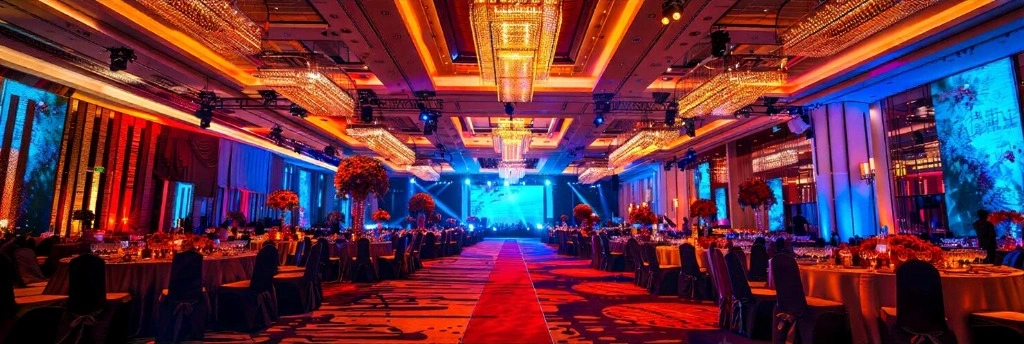
There’s a moment at every great corporate event, usually somewhere between the opening remarks and the first real conversation in the room, when you can sense it taking shape. The energy is right. People are engaged. The space feels intentional. And no one is thinking about the hundred moving parts it took to get there.
That feeling doesn't happen by accident. Now, behind every well-executed event is a layer of strategy, coordination, and quiet precision that most attendees never see. And in today’s business landscape, where firms are spending more than ever on the way they present themselves to clients, to staff members, and to their field of practice, that unseen level means so much.
Corporate event management has become much more in-depth than renting a venue or arranging chairs. It’s become an authentic reflection of what an organization stands for, how it engages in conversation, and the kind of experience it wants to produce. The bar is higher. The stakes are real. And the gap between an event that’s connecting and one that’s fading from memory often comes down to details nobody thought to take notice of.
Until fairly recently, corporate events lived comfortably in the “nice to have” column of the business budget. They were meetings, necessary, sometimes even fun, but mostly regarded as a cost center rather than an investment.
That mindset is now in full-blown retirement. Today, the most innovative organizations see corporate event planning as a core component of how they communicate, develop culture, and grow. Corporate networking events, internal corporate events, leadership gatherings, and product launches are no longer ancillary activities. They’re strategic touchpoints that help define how people feel about a brand, a company, and its leaders.
Taking a core concept and extending it makes sense when you look at what you can actually do with events. Get alignment around one vision for your company with an executive summit done well. Nothing can manufacture the kind of energy and credibility a corporate product launch event can, not even a press release. An internal corporate event, executed well, can really change how employees feel about the company where they work.
This is why companies invest in corporate events, not because they look good on a marketing calendar, but because events, when done with intention, yield real results. They build trust. They create memory. They move people.
But here’s the thing: None of that occurs without serious planning behind it. Corporate meeting and event planning at this scale requires a specific corporate event management strategy, one that starts with business goals and then works back through every logistical and creative decision along the way
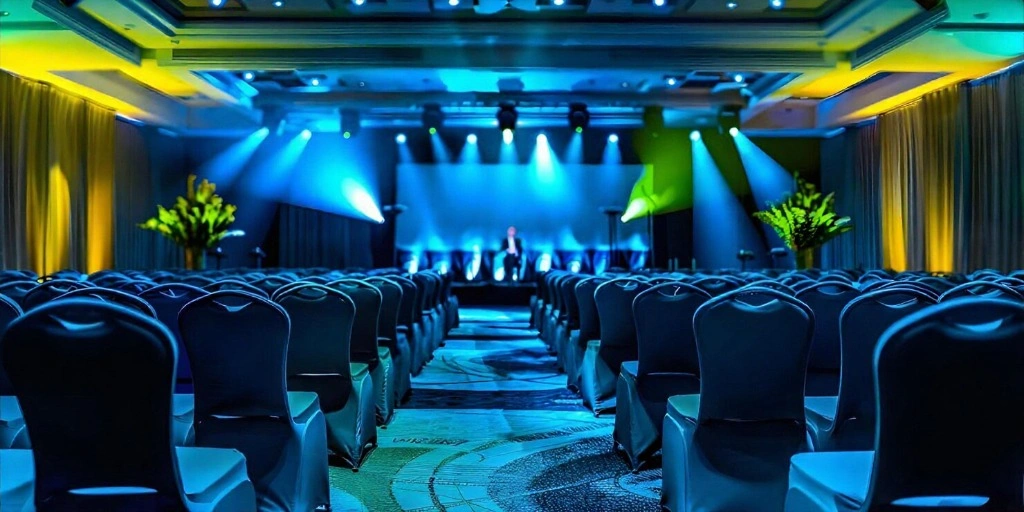

Just ask someone you know who's been to a great corporate event what made the event great, and they’ll likely tell you about their mood, speakers, or the atmosphere in the room. They won’t discuss the run-of-show document, the load-in schedule, or the contingency plan if A.V. fails.
And that's exactly the point. The importance of precision in corporate event management lies in its invisibility. When all goes well, when the logistics coalesce, the timing is precise, the transitions are seamless, the signage is clear, and the catering arrives at just the right moment—attendees neither notice nor care about any of it. They simply enjoy something that comes across as effortless and polished. When precision fails, everyone pays attention.
Corporate event planners with experience will tell you that precision is not about vanity or perfectionism. It's about protecting the experience. It’s about building an environment where the less trivial things, conversations, ideas, and a little bit of connectedness can exist without friction getting in the way.
This is particularly the case with high-visibility events. Leadership summit event planning, corporate conference planning, and brand activation events are scenarios when senior leadership is present, media attention might be on them, and the stakes for the brand are truly elevated. An execution stutter doesn’t merely create an uncomfortable moment; it implants an impression that endures.
Well, effective corporate event planning plays a key role in leaving those things behind. Structured timelines. Clear vendor communication. Detailed event logistics management. Pre-event walkthroughs. Contingency plans for what is most likely to go sideways. This is the framework that allows everything else to stand.
It’s something profound in the way that we think about what a corporate event is meant to accomplish. But the initial goal was just an information transfer. You had something you wanted to say, you brought a bunch of people into a room, and you said it. Presentations, panels, and keynotes—the format was familiar because the mission was clear.
That model still exists, but it’s not sufficient unto itself anymore. Those who come today to events have completely different expectations. They want to feel something. They don’t want to watch; they want to engage. They want to leave with more than just the notes; they’re looking for an experience that’s reinforced the way they see something or solidified a relationship that matters to them.
This is the driving force behind the rise of experience-driven corporate events. Immersive corporate events and immersive event design aren’t just buzzwords; they’re an authentic response to what audiences are craving. Rather than passive reception, businesses are building settings where people connect, discover, and participate in ways that render the content into something of greater significance—and much more memorable.
Corporate experiential events and corporate brand experience events go the extra mile. Instead of showing a brand, these events allow people to experience it in design, in interaction, and in the way a space is constructed and curated. When done right, an attendee doesn’t just learn about a company’s values. They feel them in the room.
This shift has led to event experience design becoming a serious discipline. Each aspect of the environment, its layout, lighting, flow of programming, and quality of networking spaces, is crafted in terms of how it influences the emotional journey of each attendee. Attendee engagement strategies are just as intentional as the agenda.
And corporate networking events have been entirely rethought. No more awkward cocktail-hour-with-name-tags experiences, which nobody enjoyed. In its stead: curated connection opportunities, structured conversations, and shared experiences that help people talk about something other than their job titles. The events industry matured, and with it, so did event production planning.
A decade ago, event tech was a registration system and a projector that would not inadvertently freeze. Today, event technology integration permeates every aspect of an event’s planning, delivery, and evaluation.
Technology-driven corporate events employ digital infrastructure not simply to track logistics but to shape the audience experience in play. Real-time polling. Personalized session recommendations. Farewell to manual entry with smart badging that tells you what conversations are taking place organically. Analytics after the fact that tell you not only who showed up, but also what they actually opened.
AI-driven event management is evolving particularly quickly with AI. Now, planners leverage AI tools to analyze historical data, forecast attendance behavior, and optimize room setups, as well as generate personalized journeys for the attendees. What once took weeks of analysis to manually uncover can now be surfaced in just hours, allowing teams to make quicker decisions that are smarter.
Data-driven event planning is becoming the new standard for any organization serious about measuring ROI. When you actually know what sessions brought the most engagement, which speakers inspired the most post-event discussions, and what parts of the day attendees are at their most lucid and engaged, it allows you to make next year’s event meaningfully better.
Corporate hybrid events have also evolved a lot in maturity. These early attempts were often clumsy compromises, an in-person event with a livestream that the virtual audience could at least technically watch but never truly be part of. Modern hybrid corporate events rely on digital event platforms that create authentic experiences for remote attendees: interactive breakouts, live Q&A, virtual networking, and synchronized content. The result is an event that feels cohesive for all attendees, no matter where they’re tuning in from.
This is a defining area of growth for corporate event management trends in 2026. Organizations that are able to execute hybrid formats effectively are significantly widening their reach, gathering stakeholders, clients, and team members from different geographies without the need for everyone to be in the same room. The role of technology in corporate events is no longer supporting. It's foundational.
Today’s most thoughtful corporate events evoke something larger than business goals; they embody values. Sustainable corporate events have transitioned from being a nice-to-have to becoming an authentic expectation among many organizations. Sustainable event planning varies based on the specific event, but the principles tend to align: reduce single-use waste, select venues that adhere to responsible environmental practices, go digital wherever paper would have been defaulted, and be intentional about what footprint the event will leave behind.
That matters for practical reasons; setting out to offer a brand’s customers an eco-friendly experience increasingly factors into how those brands are judged, but it matters for cultural ones too. Employees and clients are aware when a company has a thoughtfully produced event. It indicates that the organization is mindful about its decisions and that alignment between professed values and actual behavior is something the company takes seriously.
Next is human-centered event design, which is an area in which top planners are pouring a lot of thought. Years passed, and corporate event agendas were centered around content delivery; attendee well-being remained an afterthought. Long sessions with minimal breaks. Programming so dense that folks left mentally fatigued. Networking environments that felt stressful instead of energizing.
That's changing. Today, a smart corporate event strategy pays homage to pacing, comfort, and the inherent cadence of how people take in and process information. Shorter, more focused sessions. Built-in recovery time. Quiet spaces for one-on-one conversations. Catering that fuels sustained energy instead of peaking it and returning to crashing.
The logic underneath is pretty straightforward: people produce better when they feel good. Experiences built with that approach lead to much better results on all metrics: engagement, retention, quality of relationship, and how we perceive the brand overall.
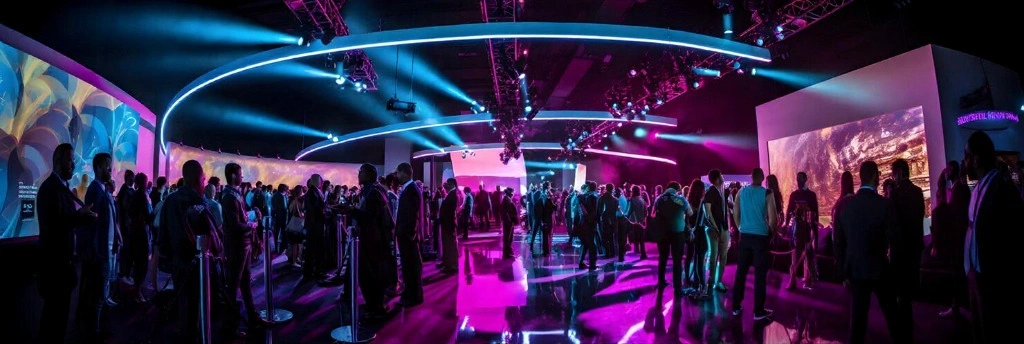
The difference between a good event and a great event is often just the people behind it. Oh Yes Events has established itself as a leading option when it comes to corporate event planning agencies in India, based on a pretty simple philosophy: Look for strategy, focus on the details, and never forget about the experience you’re trying to bring to life in a space with people.
With a team that unites strategic thought and hands-on execution over an extensive range of formats, including corporate conference planning, executive summit planning, brand activation events, corporate product launch events, and large-scale leadership summit event planning, we are one of the top corporate event management companies in Chennai for our expertise in corporate event planning expertise, and for all the right reasons.
And it starts with true listening in the planning process. Before any ideas are brainstormed, the team also seeks to understand the goals of the organization, not just for the event, but within its overall business. What does success look like six months after this event? What do you want people who walk in the door to believe or feel that they didn’t before? Those responses inform everything that comes next.
From that point on, event strategy and execution are engineered with precision. As an extensive corporate event production company in India, the team handles event production planning, manages vendors, and handles logistics right to the ground, from preparation timelines to coordination on-site, which constitutes a complete operational picture for a hassle-free run of an event.
For luxury corporate companies in India, let me tell you that the standard is high when it comes to event experience design. So, as a luxury corporate event planner in Chennai and across India, every touchpoint, be it the entrance experience, stage design, session flow, quality of networking spaces, or even the way guests are moved through the event, is evaluated in terms of how it contributes to creating a phenomenal guest experience.
The result is events that seem effortless through the eyes of the attendee. Which, of course, means the behind-the-scenes team has been putting in a lot of work for a very long time.
Looking at where the industry is heading, a few things stand out clearly. The demand for immersive event design and corporate experiential events is ongoing. Passive attendance doesn’t cut it anymore; organizations want events where everyone in the room is authentically engaged, and they’re ready to pay for design and programming that make it so.
The evolution of hybrid corporate events will continue. The technology is maturing, the audience's expectations are clarifying, and organizations are becoming better at designing for both physical and digital experiences in tandem without compromising either. The impact of AI in event management will become more common. Not instead of human creativity and judgment, but as a tool that makes that act of planning smarter, quicker, and more responsive to what attendees really want.
And there will be even more focus on human-centered, sustainable design. Sustainable event planning and genuine attendee engagement strategies aren’t fads making their way to the door; they are manifestations of larger changes in how organizations consider their obligations to humans and the environment. How to plan a successful corporate event that succeeds in this environment is really a question of values as much as logistics. What type of experience do you want to build? What does this event say about your company? Are you really considering the folks in the room, or only the script on the page?
The benefits of professional corporate event planners have never been more evident in this regard. What evolved is a level of complexity and expertise about modern events in technology, design, sustainability, hybrid delivery, and strategic alignment that goes well beyond his or her operational know-how. It needs strategic thinkers, creative designers, and disciplined executors as partners.
At the same time, all great corporate events begin with two things working in concert: close-to-the-bone planning that eliminates friction and deliberate design that adds meaning. How corporate events build brand reputation comes down to this combination. The organizations that enter the scene with clear intent, polished execution, and authentic interest in the experience they’re building for attendees are the organizations people remember, respect, and want to align with.
The corporate event trends of 2026 all have one thing in common: they’re more personal, smarter, and immersive, with an increasing acknowledgment that the single most powerful thing any event can do is evoke something real. For companies willing to invest in that level of excellence, the ideal planning partner can be transformational. Teams like Oh Yes Events, which combine the strategic depth of a corporate event management company in Chennai with the operational reach, prove every day that when smart and strategic measures marry into action, corporate get-togethers cease to be mere logistical challenges; they transform into experiences. And people take the experiences with them after the last session.
Then there’s the realm that still seems somewhat sci-fi, even though it’s already in motion. Virtual music performances, employing motion capture, holographic projection and digital avatars, are creating entirely new alternatives for performance that exist outside the physical world altogether
This isn't just a novelty. For some artists, the digital stage is an aspirational creative realm, complete with no rules of physics and multiple versions of a single performer all at once and with music-cum-visual art. As these technologies mature further, the definition of "live" performance is only going to get more interesting.
There’s a version of this conversation that is very fixated on technology and innovation, and those things really do matter. But it’s worth taking a step back and remembering that any of this works at all in the first place. People attend concerts because they want to be a part of something. They want to be in a room full of people that love the same thing they do. They want to feel less alone in whatever they’re feeling. The best concerts understand this and build toward it, not merely as an aside but as a headline goal.
Experiential event production is about designing each touchpoint of a concert, from the performance itself to the walk to your seat, the line at merchandise, the lighting before the show starts, and how stagehands reveal the stage. All of it influences how people feel and how they remember the night.
Concert production design has become something far more holistic than it had once been. The best productions take an architectural-minded view of space, how crowds traverse through it, where there might be surprises to land on, and where community forms in the most organic way. Immersive venue design expands the existing knowledge from merely what takes place on stage to the broader environment itself as a canvas.
Interactive installations in foyers, fan zones where real-life friends can band together before the show, and themed environments that take the artist’s visual launchpad into the physical realm are increasingly staples of experiential live events. These components don’t just evoke value; they provide people more to post, to snap pictures of, and to remember. They stretch the experience backward and forward in time, building up a richer story around the central performance.
Back then, the concert experience didn’t really begin when the lights went down, and it didn’t end once house lights came back up. Pre-show activations, digital countdown context, and post-show community engagement are all part of how the artist and fan relationship is maintained across the entire arc of a tour.
Large-scale concert production teams that understand this design for the whole journey, not just the ninety minutes on stage. Because the fans who feel truly represented before, during, and after the show are the ones who return. They’re the ones who invite their friends. They’re the people who take it upon themselves to create and build the communities that make an artist’s career last.
The industry transformations described in this article don’t occur in a vacuum. They’re made real by the teams, companies, and creative minds who actually do the work of bringing these experiences to life.
One of those teams would be Oh Yes Events. As an experiential event management company, they've earned the mantle of a truly audience-first approach, asking the question not of "how do we produce this?" but rather “what do we want people to feel?” It is a pleasingly slight difference, but one that makes a colossal impact on the quality of the finished experience.
The breadth of their work covers the entirety of modern live entertainment production, from early concert event planning to the intricate logistical issues of large-scale concert production. The creative and operational skill to get a world-class show off the ground is considerable, and it’s the kind of thing that may be easy to underestimate until you’ve witnessed what the difference between mediocre execution and excellent execution looks like on the night.
Oh Yes Events, a live event production company in India, has deep roots in the burgeoning entertainment ecosystem in the country and brings with it a particular understanding of the Indian market, its scale, its diversity and an unparalleled enthusiasm among Indian audiences. In that context, they work on a variety of wide-ranging events as well as entertainment event organizers in India who know the cultural markers and production logistics for large-scale events.
That's precisely the combination of experience, ambition and audience empathy that Oh Yes Events offers clients during those times when they seek more than mere competent execution—genuine creative partnership from one of India's best event organizers. In their eyes, to be considered a great concert event management company is essentially the same as caring about the people who turn up.
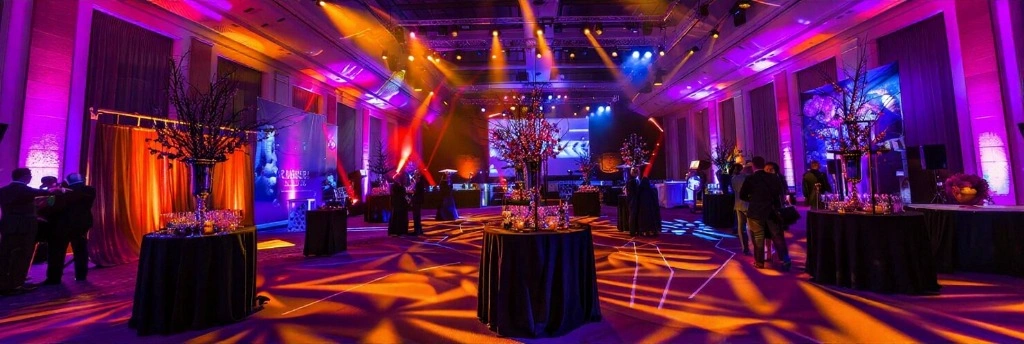
After all the technology, all the data, and all the innovation, what it keeps coming back to is something pretty simple: people want to feel connected. To artists they love. To other people who love the same things. To something larger than their everyday life. Concerts, at their best, have always done that. What's changing now is the scale at which it can happen, the sophistication with which it can be designed, and the depth of relationship that can be built between artists and the communities around them.
The future of live events belongs to those who understand this, who see fan engagement technology not as the point, but as the means. Who approach experiential live events with genuine care for the human beings showing up. Who recognize that the live music experiences audiences are craving are really, at their core, about meaning. The artist-fan connection that concert culture enables is one of the most powerful forces in entertainment. As the tools for nurturing that connection keep evolving, the organizations and artists who use them thoughtfully, with creativity, integrity, and real respect for their audiences, will be the ones that define what live music looks and feels like for the next generation
Oh Yes Events is proud to be part of that story