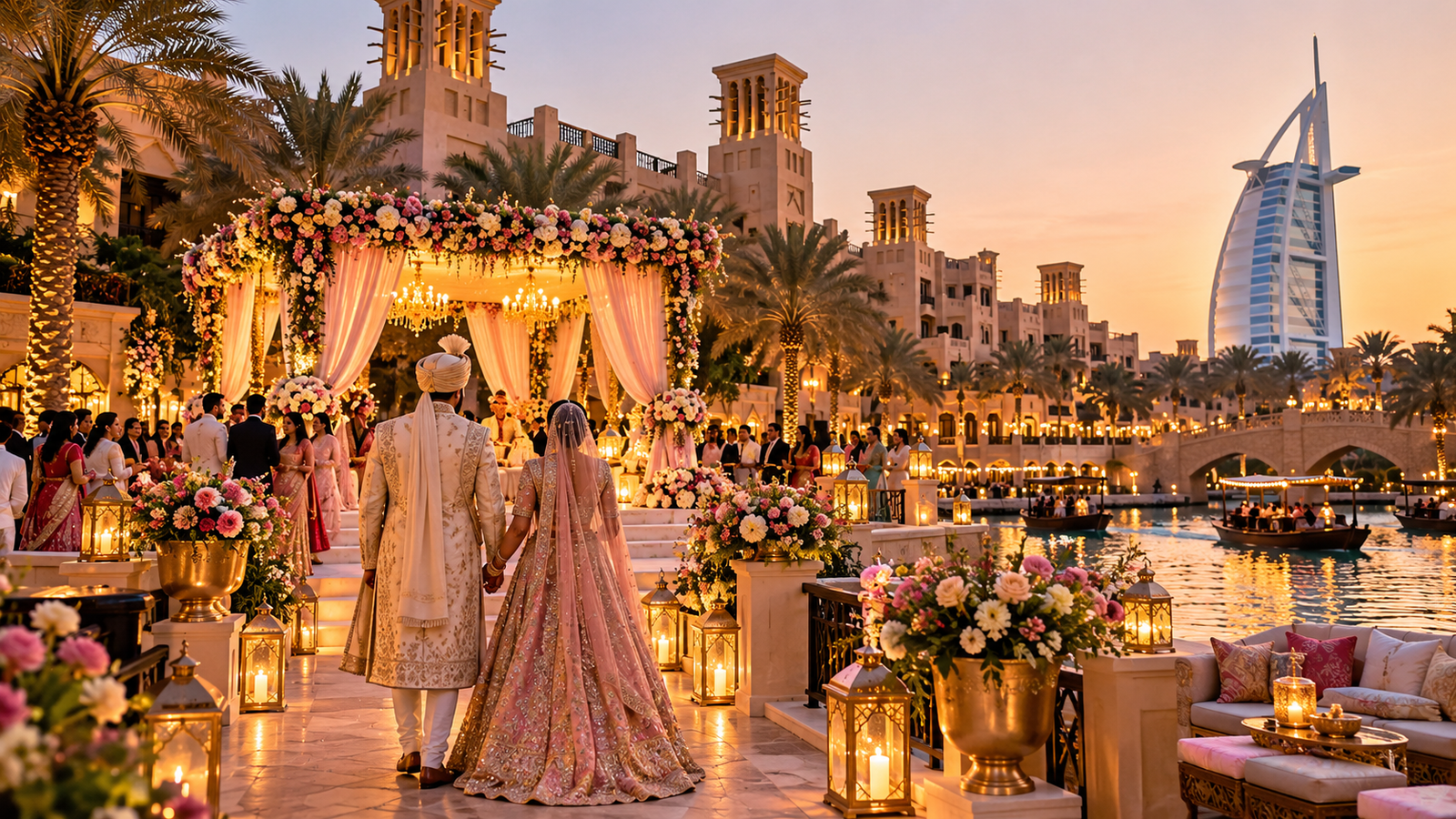
For many NRI families, a wedding is not just another celebration; it's three days of rituals, a reunion for family members arriving from four continents, and one opportunity to finally give it all to the parents. The question is rarely whether to throw a big party: it's where. Increasingly, the answer is Dubai, and within that city, one name keeps coming up: Madinat Jumeirah. With its serpentine waterways, abras gliding past sandstone walkways, and the Burj Al Arab on the horizon, it seems made for a baraat, but putting on a multi-day Indian wedding at Madinat Jumeirah means one thing above all: planning. This playbook will guide you through how to host an Indian wedding in Dubai the way an experienced planner would, including choosing spaces, designing a three-day itinerary, protecting your muhurtham, perfecting the food, and handling the permissions nobody wants to talk about.

Before diving into the details, it's worth discussing what makes this luxury resort a perfect choice for an NRI family considering a destination wedding in Dubai. The reason often boils down to this: a resort that feels simultaneously grand and personal, familiar and foreign, close and far away.
Madinat Jumeirah is not a single hotel but a collection of them, as well as courtyards, waterfront terraces, a souk and event spaces. This modularity is an asset when hosting a wedding with multiple events, allowing important functions to take place in distinct settings, where they can feel more intimate and immersive.
Dubai is a short direct flight from most Indian metros and an easy connecting point for relatives flying in from the UK, the US, Canada, Australia and Africa. The convenience of having most guests under one roof cannot be underestimated, not least because it removes the stress of travel, particularly for elderly family members. If most of your guests will be staying at the venue, it's worth factoring this into your overall planning.
The warmth and generosity of Arabian hospitality is perfectly suited to the Indian concept of 'atithi devo bhava'. Staff at a resort of this calibre are experienced in handling large families, extended stays, and the needs of elderly guests.
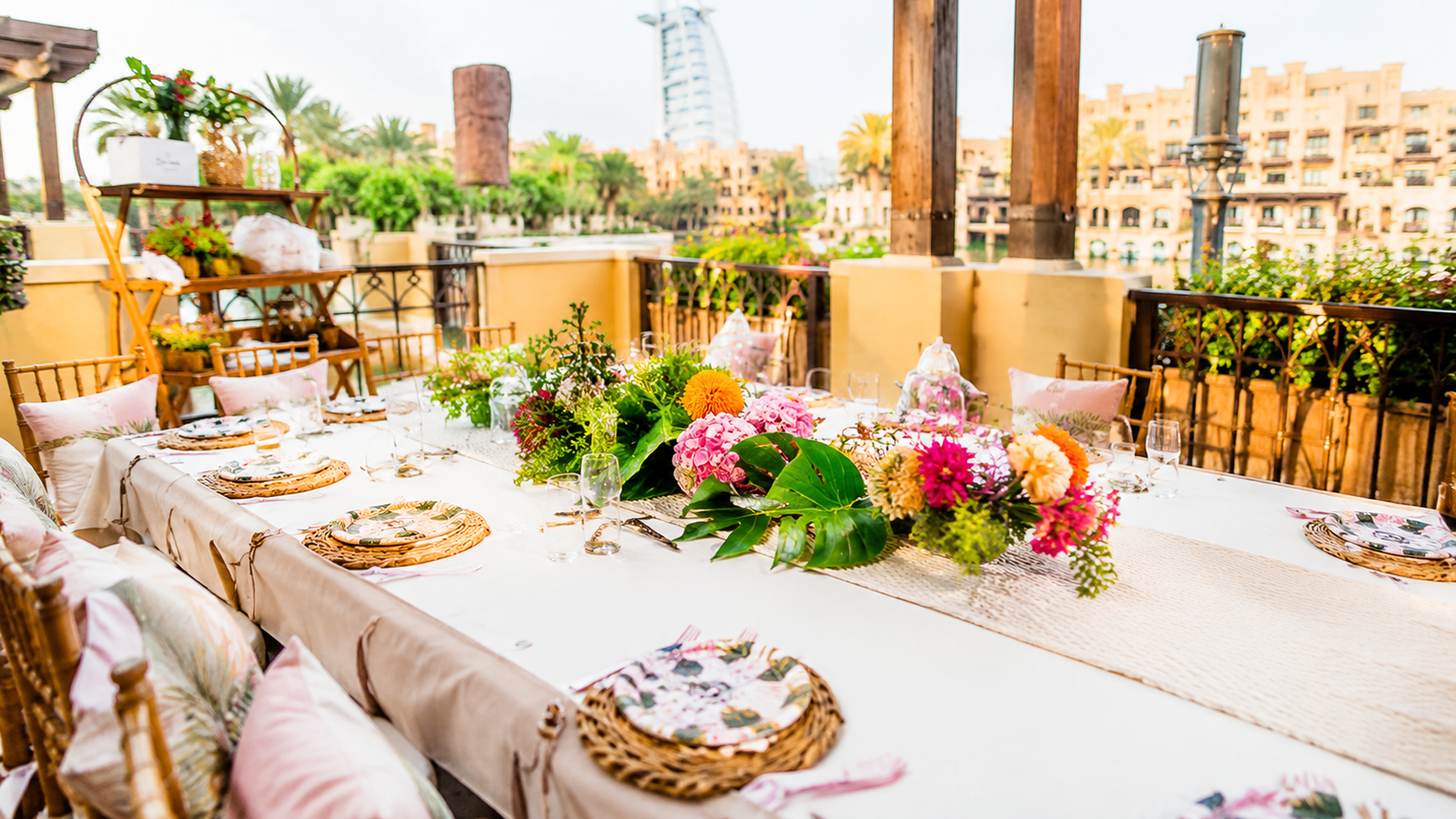
One of the most important decisions in planning a Madinat Jumeirah wedding is deciding where to hold each function. Think of the resort as a series of stages and pair each ritual to the setting best suited to its needs.
A wedding ceremony and grand reception will require a large, well-lit space with ample back-of-house support for catering and decorations. Larger ballrooms and the resort's arena-style event spaces are typically the venues of choice for these types of celebrations. Be sure to ask about capacities depending on the type of seating you choose, as a sit-down dinner with a full mandap and stage will require significantly more room than a cocktail reception for the same number of guests.
Smaller, more intimate functions such as a mehendi lunch or haldi breakfast are best held in more compact spaces such as courtyards, garden terraces or private dining rooms. These are also excellent venues for family affairs where guests are encouraged to mingle, especially during the morning and afternoon when families tend to gather to share meals and visit.
The waterways and terraces are perfect for holding events that will be captured and savoured photographically, such as a groom's grand entrance, a cocktail reception at sunset, or a vidaai procession. Outdoor weddings are dependent on the time of year, so ask your planner about having a back-up indoor space, if needed. A good planner will already have one in mind.
A three-day Indian wedding in Dubai works best when each day has a core theme and enough padding between events to allow for delays and changes of plans.
The first day should be relaxed, with a welcome lunch as guests arrive, mehendi in the afternoon, and then either a haldi in the next morning's early hours or the same evening. It is important to allow enough breathing space for extended family members who may have travelled a long way to be a part of this.
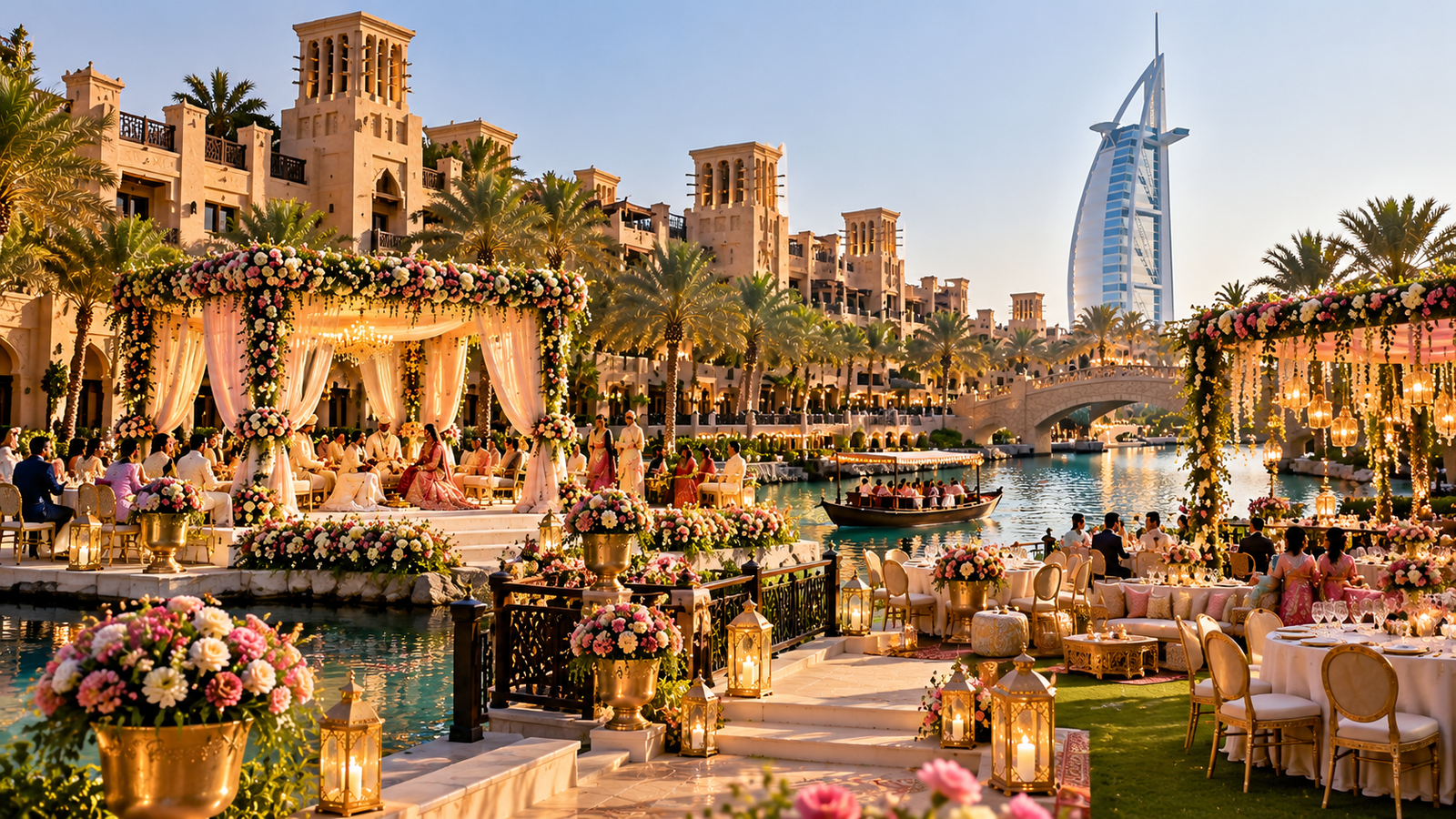
The sangeet is probably the most important day of the wedding weekend in terms of spectacle, with the whole family participating in a raucous, boisterous performance, and the sangeet night is the culmination of this. Rehearsals, though often neglected, are vital if any family member is performing a solo or with a group—the last thing anyone wants is for a recital to interrupt the dinner seating. A technical rehearsal should be scheduled in advance so that family performers can walk the stage. Lighting and sound should be considered as part of production design, and a run-of-show should be scheduled to avoid having to stop dinner service to accommodate the program.
The third day carries the most weight, with the wedding ceremony, the pheras or nikah or other rites specific to your tradition, the photographs and the reception all needing to be included. It is always a good idea to leave generous time slots for changing outfits, taking portraits, and any other unexpected delays. Realistic scheduling beats empty promises.
A resort is not a home, and that presents challenges when it comes to rituals particular to one's tradition. Some of these are easily adapted to a hotel environment, others less so, and it is always a good idea to plan ahead and make sure all necessary conditions can be met.
If your pandit has set an auspicious time for your wedding, treat it as non-negotiable and work backwards from there. Early-morning muhurthams require catering, venue preparation teams, and post-ceremony refreshments to be available well before sunrise. The exact timing should be communicated to the venue well in advance, and ideally at the beginning of the booking process.
Numerous ceremonies require a sacred fire, flower garlands, rice, ghee, and a custom mandap, all potentially problematic items inside a hotel due to fire restrictions and other safety regulations. These should be discussed as soon as the venue is confirmed, and alternatives found if necessary. Your planner should know what adaptations are possible while still respecting the spirit of the rite.
A Tamil Brahmin wedding, a Punjabi Anand Karaj, a Gujarati ceremony and a Malayali wedding all have very different requirements for their rituals and feasts, and it is always a good idea to go over these with the planner in advance, in as much detail as possible. Many of these small touches, such as where the groom's family sits or when the thali is offered, are what make a home away from home feel like home to relatives.
The food is often what Indian wedding guests remember most, which makes it all the more important to get right. It is also what causes the most confusion, as the resort's in-house catering has to contend with the expectations of multiple regional cuisines.
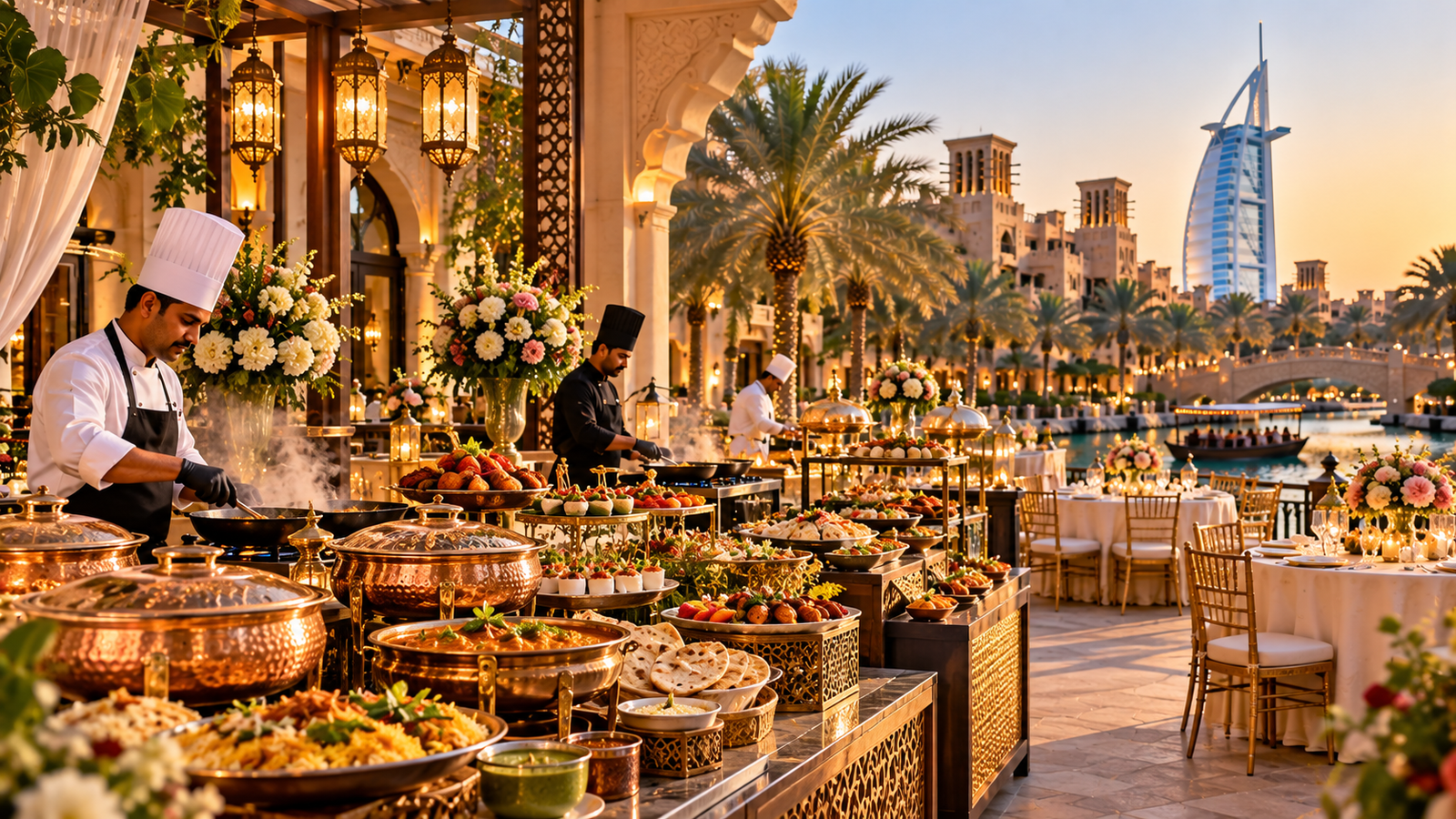
A South Indian, Gujarati, Punjabi, or Bengali wedding all requires specific chefs, ingredients, and preparations, which can be a challenge for an in-house kitchen. It is always a good idea to raise this with the planner and the hotel well in advance of the event, either to confirm that the staff can cater to your needs or to look for a specialist caterer which can work within the venue's guidelines. Some venues do not allow outside caterers, and some do, so this is a matter to raise well in advance.
With multi-day weddings come multi-cultural guest lists, which means a variety of dietary restrictions and requirements. Pure vegetarians, Jain vegetarians (who do not eat root vegetables), and guests who only eat halal food, plus children who just want pasta, all need to be considered. This covers everything from separate preparation areas to tasting menus and should be done well in advance of the event. Always assume the menu will need adjustments.
Some of the best parts of a wedding are the unexpected ones, like the chai counter after the pheras, a chaat bar at the sangeet, or a late-night snack for the dancers. Small touches like these go a long way.
As glamorous as the event itself is, it's the boring stuff that requires the most planning, especially for first-time brides and grooms.
Large events, amplified music, fireworks, drones, and special effects often require special permissions, and these can take time to organize. Your venue and planner will be aware of what is needed for your event and should have the necessary paperwork in order.
A ceremony at a resort and a legal marriage are two different things, and the latter often takes place in India (or a civil ceremony in the UAE). This can be a complex process that changes from time to time—the best advice is to consult the appropriate authorities or your planner in advance, particularly if you are flying in from outside the UAE.
Indian passport holders require visas for the UAE, which can take time to process. This is another matter to raise with your planner as early as possible, along with guest accommodation and transport. You may also want to provide a simple guide to the local area, dress codes, weather, and the event schedule for your guests to avoid frantic phone calls in the middle of the night.
These are the most common questions we receive from NRI brides and grooms and the answers we give.
Oh Yes Events is an ISO-certified event management company, with a presence in both Dubai and India. We understand both sides of this celebration: the rituals and family traditions you wish to uphold, as well as the logistics and venues involved. We handle the details of a multi-day Indian wedding so that you and your family can enjoy every moment of this important celebration, from the rituals to the run of show, from the catering to the guest management and permits. Get in touch with the Oh Yes Events team to discuss your needs and start planning your special day.