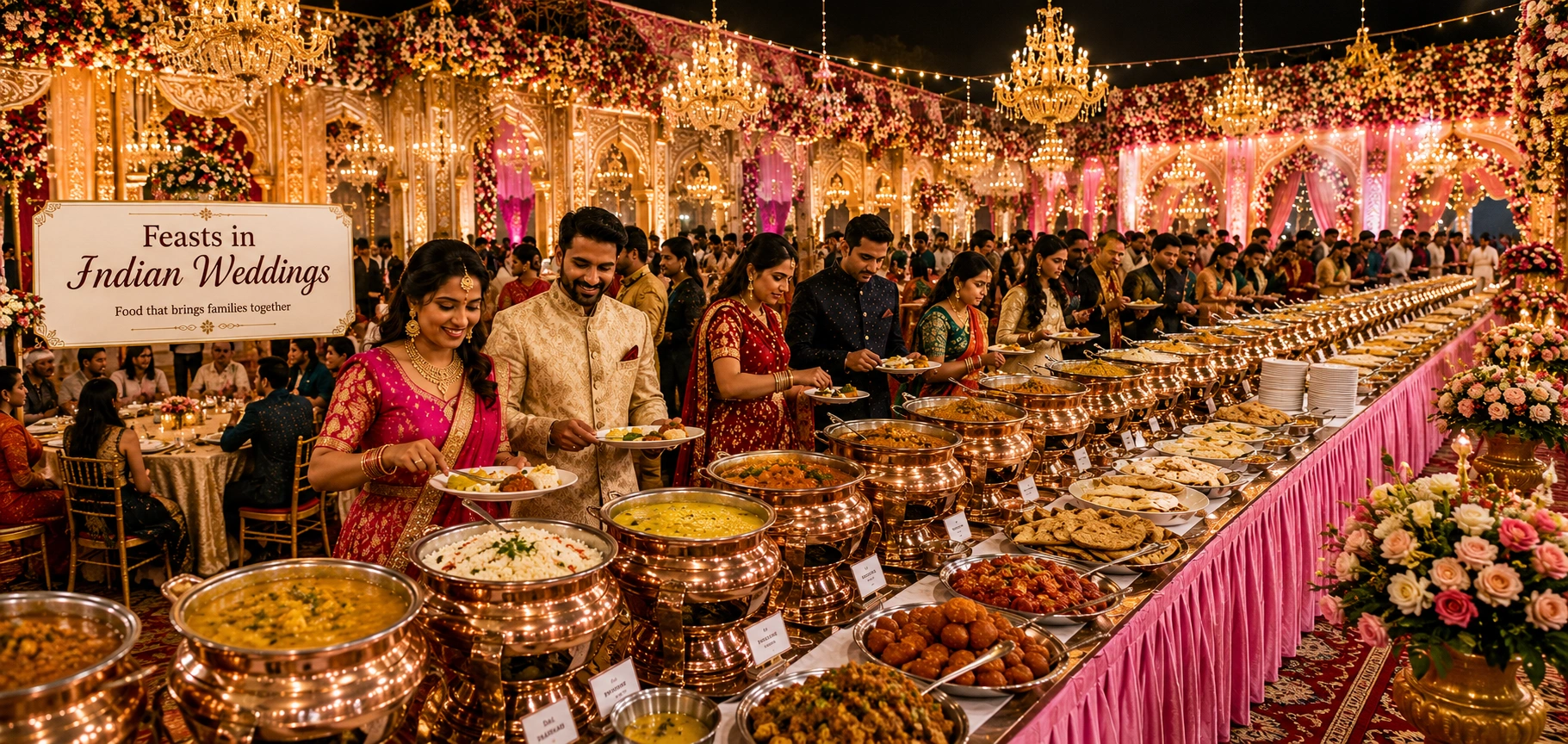
Indian weddings have never just been about performing certain rituals, decorations, or putting up huge celebrations. On a more basic level, weddings in India are nothing but social events where connections are made, and memories are formed that last for generations. While many aspects form an important part of any celebration, food has always been seen to play a significant role in Indian Weddings.
Traditionally speaking, Indian wedding traditions always took pride in offering guests a feast like no other. Regardless of whether the venue was a community gathering with hundreds of guests or a small and private event amongst a couple of families, providing guests with delicious food has always been considered an important aspect of hospitality. That is the reason why the tradition of community feasts at Indian Weddings is still relevant today.
However, in recent years, the concept of food has taken on a different perspective as well. Today, couples realize the true value of food and have started including food as an important element in their entire Indian wedding guest experience. The traditional practice of feasting is becoming increasingly popular once again in today's modern Indian Weddings, especially those taking place as Destination Weddings.
For planners as well as hospitality-oriented brands like Oh Yes Events, this is quite an interesting period. Celebrations today are not about how big the food spread is, but about how good the entire experience that goes along with it is. Moving into 2026, traditional community feast celebrations will take on a new meaning and will be transformed into hospitality experiences that are both memorable and intimate for modern couples and their loved ones.
To fully grasp the reason behind such an integral role that community feasts have been able to play in the context of Indian weddings, one needs to delve into the history and cultural aspects surrounding this practice.
In earlier times, weddings in India did not tend to be intimate events. Rather, they would involve whole communities as participants, including all members of extended families and neighbors. It would be at the wedding feast that each attendee would become part of the festivities, irrespective of their age or status. Such a style of hosting would be rooted in the very core of Indian wedding customs. Rather than the lavish nature of weddings being the indicator of success, the warm reception of guests and attention paid to them played a key role. Thus, the serving of food was seen as a way to show appreciation and respect for guests and reinforce social ties. Also, the practice of having feasts involving several people laid the groundwork for many aspects that now influence wedding banquets today. As much as the presentation of foods and dishes may differ from then to now, their main aim remains the same.
Whereas there is no denying the fact that the idea of community dining is common to all of India, the way it takes shape differs greatly from region to region. Langar is a popular practice in Punjab, which brings out the essence of community eating through equality, sharing, and unity by allowing people to dine together irrespective of their social standing. The sadya tradition in Kerala turns dining into an event where food is served in banana leaves in an elaborate spread. Similarly, there are many other regions, such as Rajasthan, Gujarat, Bengal, and Tamil Nadu, among others, that have unique traditions surrounding their food culture.
It is through these practices that we get an insight into the great variety of Community Dining Traditions in India. However, they also indicate the importance of the cultural significance of wedding feasts in India, which goes beyond the mere consumption of food to becoming symbolic of heritage, ethnicity, and identity. These cultural traditions have been embraced and revived by young couples during their wedding feasts, and that makes them distinct features of today's wedding cultural experience.
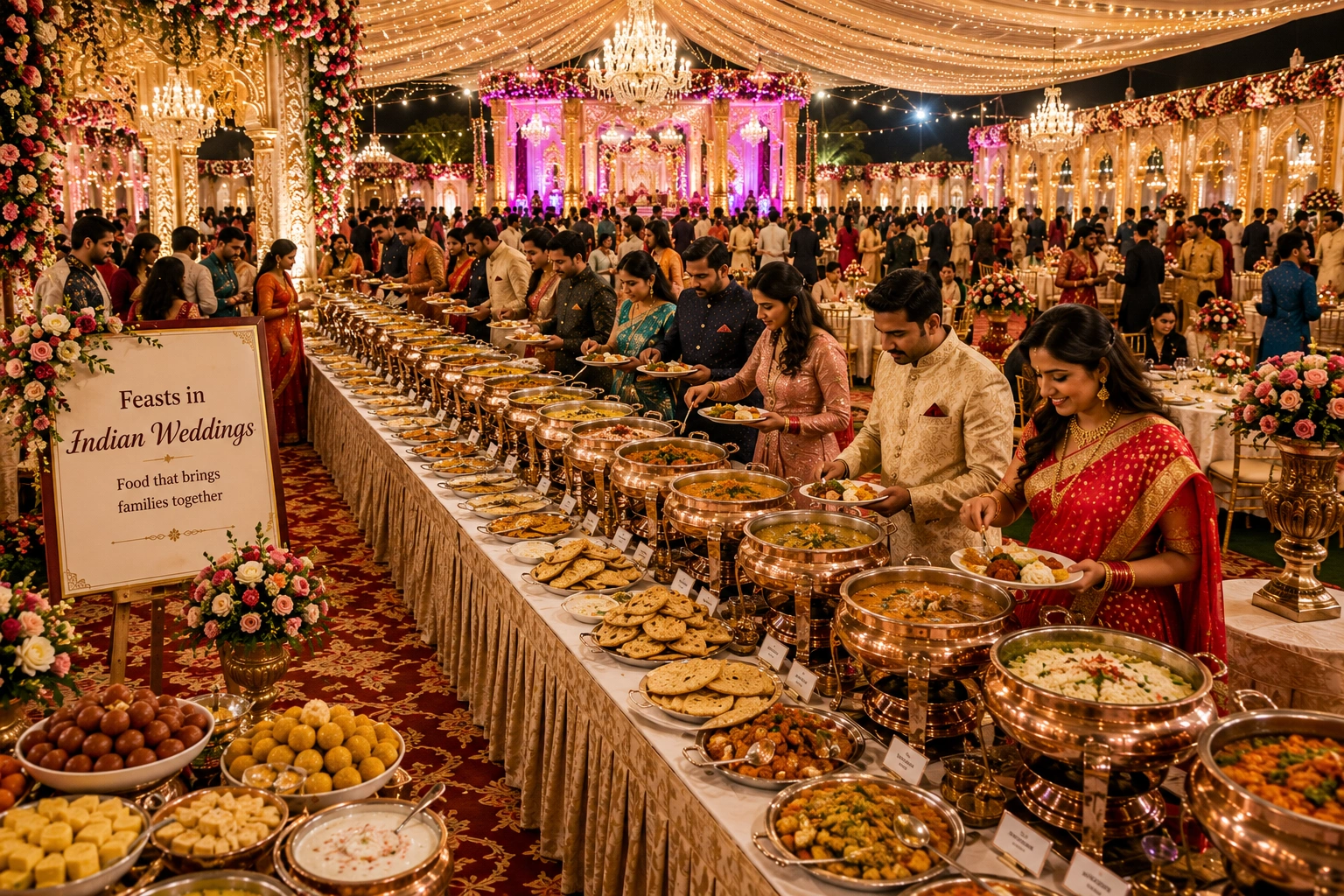

Food has been known to form a common language of Indian festivities. Well before 'guest experience' emerged as a marketing term, people knew that making the guests feel welcome was crucial through being hospitable towards them. The notion of 'Atithi Devo Bhava' plays a major role in Indian wedding hospitality, emphasizing that it is necessary to treat the guests in an exceptionally good manner. It means that the food served at any wedding occasion becomes a way to express generosity and gratitude.
It is one of the main reasons why a traditional Indian wedding dinner remains among the highlights of the event. The floral decorations or stage design of the wedding can eventually fade from the memory of its guests, but not the treatment they received. Weddings become more personal every day, and food remains a way for them to express something emotionally.
Though the format of weddings may change with time, the craving for authentic human connection can only grow stronger. That is why community-style dinners have seen a recent revival among weddings in India.
The wedding industry has seen massive changes in the past couple of years. Brides and grooms are moving beyond the purely spectacular to focus on moments that mean something more to their guests. That is when wedding dining experiences started to take center stage by emphasizing social elements and encouraging guest engagement. Instead of just providing a broad array of dishes, couples began to offer events where people would gather around a table to share and bond.
With the emergence of communal settings, tasting tours that highlight different regions, or culinary demonstrations, food started to become an integral part of wedding guest engagement. The idea was not to serve a meal anymore but to give people something to experience. Family-Style weddings and dining are therefore becoming increasingly popular among planners these days.
Another significant guest experience trend in Indian weddings is the increasing importance of hospitality-focused event planning. In modern times, the success of a wedding has more to do with the guests' experience throughout their entire wedding trip rather than any other factor. This ranges from guest transportation and accommodation to guest entertainment and dining. As a result, wedding hospitality management has become an essential aspect of the planning process for those having grand weddings.
This trend is especially noticeable in destination wedding planning when people travel long distances in order to celebrate a wedding. Indeed, in such cases, not only is the menu of greater importance because eating is no longer just about consuming food; it is also about building relationships. Exceptional destination wedding hospitality always involves carefully planned dining sessions that enable guests to become more engaged with the destination, the wedding culture, and the hosts. It is for this reason that community feasts have gained significance in multi-day wedding celebrations.
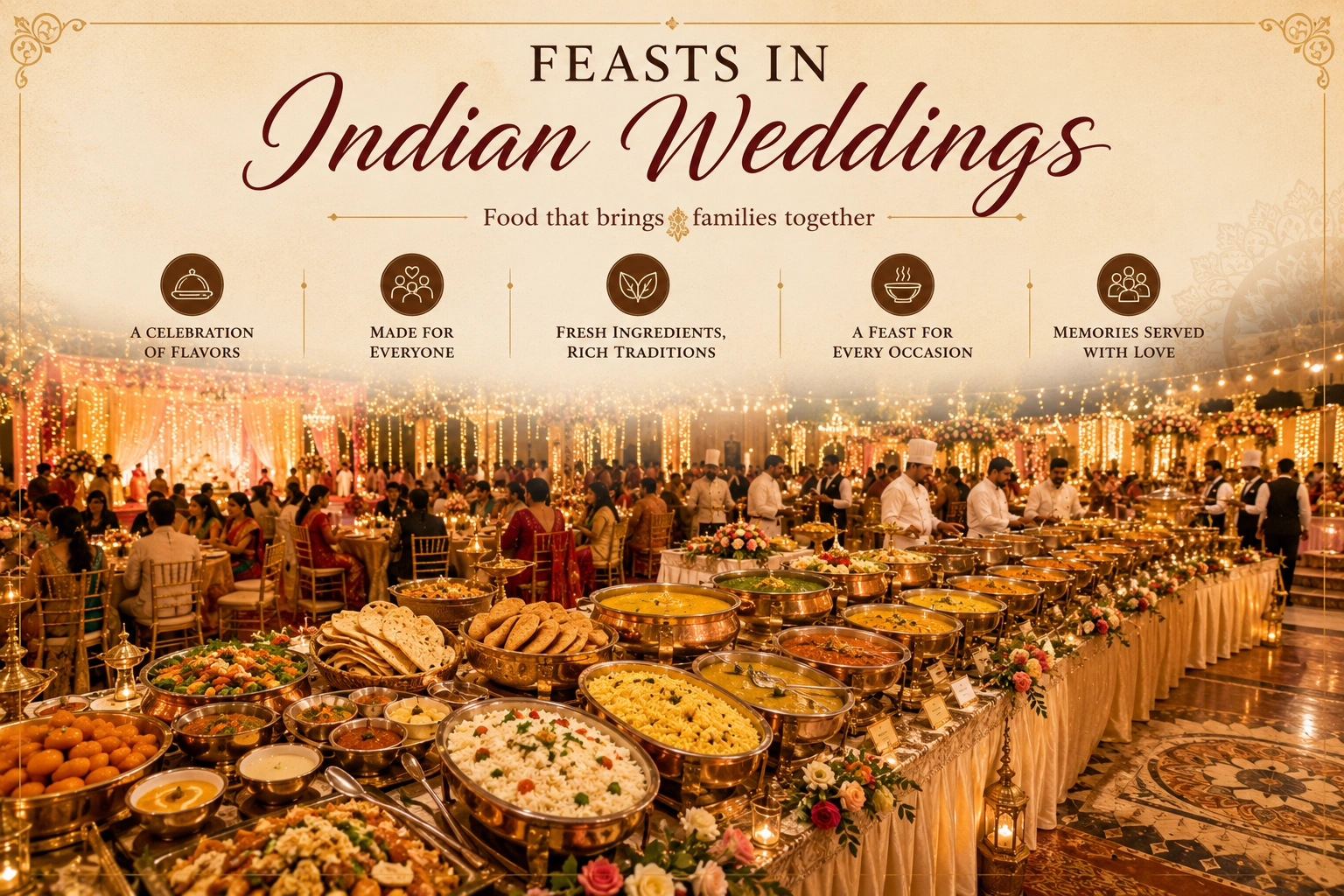
One of the most defining trends influencing wedding hospitality trends in 2026 is the tendency towards authenticity rather than opulence. Contemporary individuals tend to pay more attention to experience. They are now more concerned about individuality and culture rather than the mere number of attendees at their wedding party. This phenomenon has also stimulated the revival of community dining in modern indian weddings, where lavishness gives way to significance. The couple can use the culture-based traditions and apply them to their own wedding event in their own way.
This means that the hospitality experience should not only be lavish but culturally authentic as well. In this respect, the traditional vs. modern wedding hospitality discussion proves the necessity to combine both elements of wedding parties and find harmony between them. Community feasts are an embodiment of this concept because they embrace the core principles of Indian community feasts while still meeting the needs of today's individuals.
Although community feasts may be traditional in nature, their contemporary definition cannot be described as anything conventional anymore. As couples continue to look for an increasingly memorable and immersive experience, food is proving to be one of the most effective means through which stories can be told at weddings.
Modern-day guests do not wish to witness anything but rather get involved and participate actively. Community feasts have therefore taken on a new meaning, changing from massive buffet styles to carefully curated events and broader wedding catering trends where food is used as an avenue to express culture and hospitality.
A trend that is becoming very noticeable in recent times is regional food stories. People are getting more interested in selecting meals based on their unique stories rather than just opting for any other menu available. This means a wedding that is taking place in Rajasthan could be based around Marwari dishes, whereas a wedding that takes place in Kerala can be organized by incorporating local dishes as well as dishes made by the family for generations. This gives the meals an entire story of their own. Food storytelling is thus becoming an integral part of the wedding food experience, making each experience more significant and special. It is also contributing greatly to the rising popularity of wedding cultural experiences.
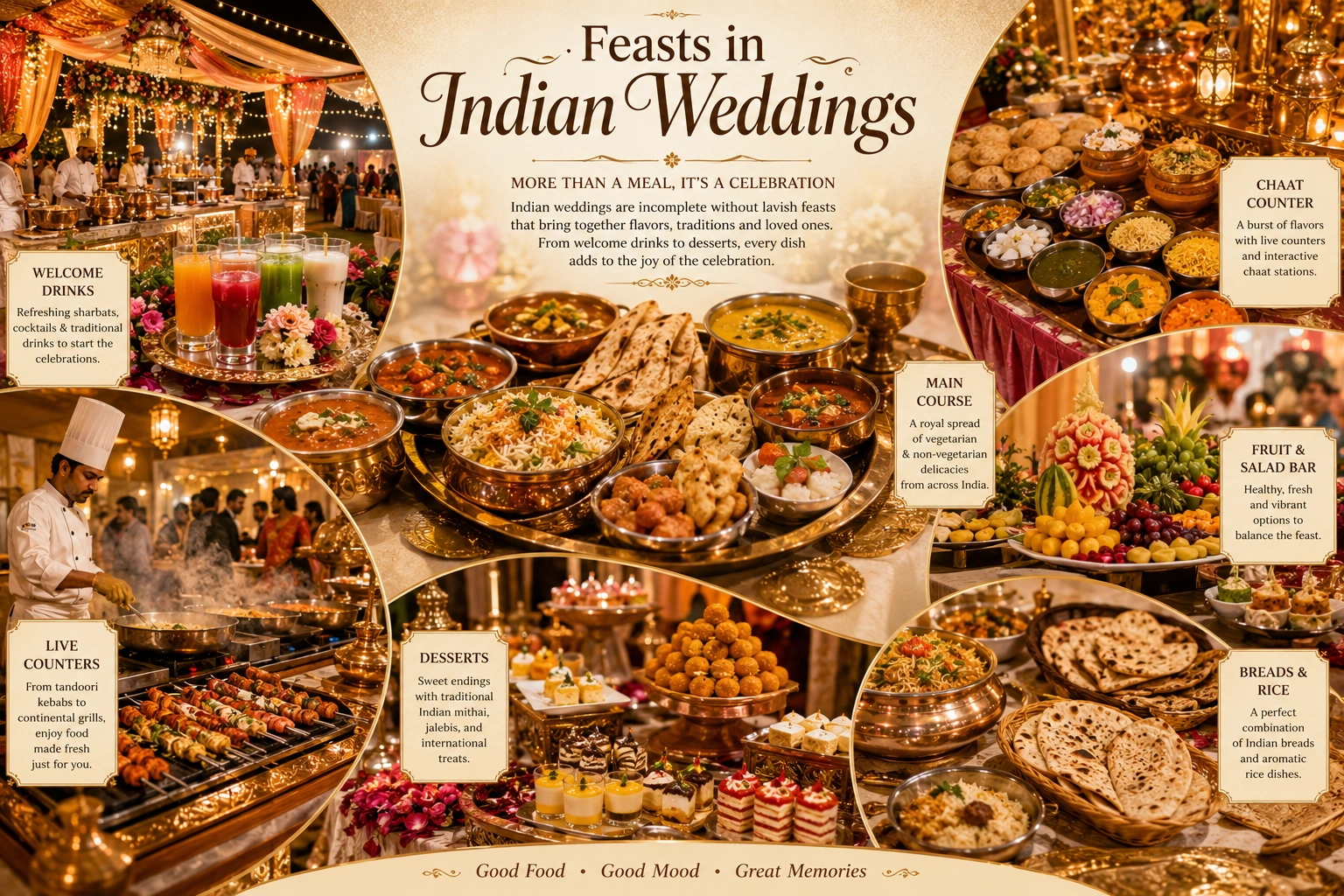
Modern weddings have gradually progressed from the classic buffet system, with couples now looking for innovative ways in which guests can participate during their events. As such, experiential wedding catering has become popular because, in most cases, it involves bringing food into the wedding itself as a lively component as opposed to just being a service. Whether chefs are making their special dishes in front of guests or local culinary artists are showcasing their indigenous way of cooking, these interactive food stations add fun and excitement to the entire event.
With various concepts ranging from the regional chaat counter, handmade dessert bar, and live grilling to chef tasting sessions, couples and planners can turn ordinary meals into exciting experiences for their guests. Not only do these food stations allow guests to learn new flavors, but they also give room for guests to interact not only with the culinary specialists but also among themselves. As such, interactive dining formats provide an efficient way of wedding guest engagement.
The introduction of communal seating is yet another trend that is becoming increasingly common among luxury wedding planners in Chennai. Drawing on both the old traditions of eating together and modern hospitality practices, communal table seating enables couples to organize their event around intimacy.
As opposed to formal dining tables at banquets, communal table seating makes it possible for everyone to interact freely. It becomes easier for families who are seeing each other for the first time during the event to get acquainted while having a casual dinner.
Communal table dining goes hand in hand with the family-Style wedding dining trend. This means that food is shared between guests instead of being individually served to them. Thus, communal dining is likely to become an indispensable component of modern wedding hospitality practices.
Technology has been another significant aspect influencing wedding meals in the current times. From recording dietary preferences and managing allergies to digital storytelling on the menus and personalized food choices, new technologies have made it easier to deliver more personalized meals at wedding ceremonies than ever before. Personalized wedding dining has become a growing trend for the hospitality industry in general. Customers always expect personalized services based on their tastes, and weddings cannot be an exception. It is especially crucial in those cases when it comes to large ceremonies with different profiles of guests that call for effective hospitality planning.
In their most ideal form, the purpose of a community feast is one that no other aspect of the wedding quite reaches: to truly unite people together. Despite the contribution of décor, entertainment, and production to the atmosphere of the event, nothing is quite as successful in forging a real connection as food.
Community feasts in Indian weddings can be considered very significant for their natural and profound ability to unify people. Instead of having an awkward atmosphere at formal celebrations when all the guests act like observers, the communal dinner offers people an opportunity to come close in a relaxed atmosphere, to start conversations that will allow family members and friends to reunite. It also provides an occasion to create bonds between new friends and acquaintances during a common meal, which adds value to the festive spirit of the celebration.
For those weddings where there are lots of guests that have not met before from different cities or social environments, community-style dining plays a crucial role in allowing social barriers to be broken down and people to interact without hesitation or reluctance. The festive event turns into a great chance to learn something new about others, to make mutual acquaintances, and to take part in a wedding celebration naturally and interestingly.
After the music stops playing and all the festivities have ended, guests often recall the emotions they experienced at the weddings instead of remembering everything from the wedding agenda. Hospitality and other aspects of interaction may have left a deeper impression on them. That is the reason why food remains one of the most influential factors contributing to the success of the whole event. It is essential to choose appropriate dishes and create positive associations in order to make your guests remember their experience for a long time.
An ideal illustration of how food creates memorable wedding experiences includes different ways of gathering people around food. For example, a communal dinner, preparation of old family recipes, or a late-night snack after numerous hours of parties and fun can contribute greatly to evoking strong feelings and starting conversations among guests. For those who are willing to create unique wedding experiences for themselves and others, memorable hospitality should remain more important than decorations and visuals.
Among the most memorable weddings, the role of guests is not to be mere spectators but to actively participate in the celebrations. Community feasts allow people to interact with each other, communicate, share opinions, and have fun. Be it trying out exotic dishes from a certain region or taking part in cooking contests and other food-related activities, the process allows guests to immerse themselves in the wedding atmosphere and make them feel as integral parts of the party.
In terms of luxury wedding experiences, such an idea becomes more relevant as many couples today tend to emphasize the importance of individuality, genuineness, and emotions. The focus is no longer on the luxurious appearance but on meaningful events when guests can take part in the process of celebrating a marriage ceremony. The same applies to luxury destination weddings, where there is a unique opportunity to present local cuisine to guests, making them discover new tastes and flavors.
In light of the increasing significance of sustainability within the wedding industry, couples have become more conscious about their food planning, sourcing, and serving methods. It is fascinating to note that the traditional feast practiced by communities is already imbued with sustainability features such as the use of seasonal products, local sourcing, communal consumption, and zero-waste production.
For many decades, a luxurious wedding menu has been a sign of generosity and wealth. Today, however, the focus of newlyweds is changing towards organizing thoughtful and quality culinary experiences. There is a growing concern about the problem of food waste, which contributes to people's wish to have celebrations that would be remembered but, at the same time, not wasteful. Instead of striving for an enormous number of meals offered to guests, couples opt for menus specifically designed based on guest requests and event format.
Among those sustainable catering ideas for destination weddings that are the most efficient, one should highlight menus that are well thought out and focused on the guest experience, forecasting the number of guests attending the celebration, and the proper service style. Using the right amount of food and providing guests with high-quality local cuisine will help caterers make celebrations both environmentally sustainable and hospitable.
The rising popularity of local food experiences at wedding celebrations is one of the latest trends. Modern couples opt for menus featuring local produce, local recipes, and specialties, giving the guests an opportunity to taste the distinctive cuisine of the place chosen by the newly married couple. This option makes the wedding even more special and gives the event greater meaning since the menu corresponds to its surroundings.
The principles of sustainable wedding catering fit perfectly well with the above trend because, by opting for locally sourced food, wedding couples minimize their carbon footprint related to transportation. Moreover, this option helps promote the local economy by giving farmers, bakers, and local specialists their due. In addition to reducing their negative impact on the environment, wedding couples allow their guests to explore the place in more detail. Locally sourced dining becomes one of the most unforgettable experiences.
Most of the sustainable practices being explored by the present generation in their wedding ceremonies are not entirely new. In fact, environmental eating practices have been a part of Indian culture for many years now. This was achieved through season-based cooking, the use of local products, collective food consumption, and responsible eating habits. Community feasts, when celebrated in earlier times, focused on the use of what was readily available at hand in the environment to limit wastage.
In recent times, as people are trying to plan their weddings responsibly, such practices seem to be relevant once again. This makes use of locally available produce, avoids excess, and celebrates community food consumption practices. It helps couples to maintain their traditions and stay relevant to current trends of sustainability simultaneously. Such an ability to combine heritage with innovation seems to be a hallmark of modern wedding hospitality practices, making sure that traditional practices remain relevant to today's world.
However, at Oh Yes Events, hospitality means much more than just logistics. In fact, hospitality ranks among the key factors behind a successful wedding. Any wedding is essentially about people coming together, which means that engaging guest experiences can only be achieved by carefully considering all the aspects of this process. As wedding hospitality experts, the Oh Yes Events team believes that perfect celebrations are always about people, relations, and memorable moments rather than mere plans and services.
As a part of this strategy, every element of the experience should be thought through with care. Thus, Oh Yes Events' approach goes far beyond organizing food as such. Instead, it includes creating the right setting for a natural interaction between people as well as developing traditions of participation and communication. This idea can be traced even in such a simple detail as a choice of dining options. The goal is to help people bond and have fun while enjoying their meal.
Apart from being destination wedding specialists, Oh Yes Events is aware of how important it is to include elements of local cuisine in order for the wedding to be even more memorable. Incorporating the unique features of the region, cultural traditions and customs, family recipes, and destination menu will make any meal at the wedding highly personalized, authentic, and related to the event itself.
Modern weddings need to find the right balance between all aspects of organization and guest requirements. Through comprehensive end-to-end wedding planning services, wedding guest management services, and event production and wedding planning, Oh Yes Events ensures that each event becomes an easy-to-run yet meaningful celebration. From small events to luxurious destination weddings, the aim is the same: to ensure a memorable and unique hospitality experience.
Despite changes in trends, evolving demands by guests, and more complex celebrations, the basic idea of Indian weddings has remained very much the same. It is all about gathering people together, and it would be difficult to think of any tradition that does this better than the community feast. The evolution of Indian wedding dining traditions reveals that, despite becoming increasingly contemporary, cultural traditions can still be relevant. In today's weddings, community feasts are not just about eating. They are now seen as a means of creating connections, storytelling, entertaining guests, and providing hospitality.
The role of Hospitality in destination weddings explains why the importance of food is unlikely to diminish. With couples investing so much into the experience created by their weddings, it is important to realize the power of food in building those relationships. Moving into the future, the evolution of community feasts during Indian Weddings will be driven by personalization, sustainability, cultural authenticity, and an enhanced guest experience. All these aspects continue to influence the future of guest-centric wedding planning.
The takeaway from this for couples who will want to plan their celebrations from 2026 going forward is that great weddings are not about what guests saw at the wedding but about what they all experienced. As it happens, a carefully designed communal meal is still one of the best ways of achieving an unforgettable experience at any wedding celebration. Such a perspective on hospitality is still driving the work of Oh Yes Events among other event planners who have embraced the power of human connection.